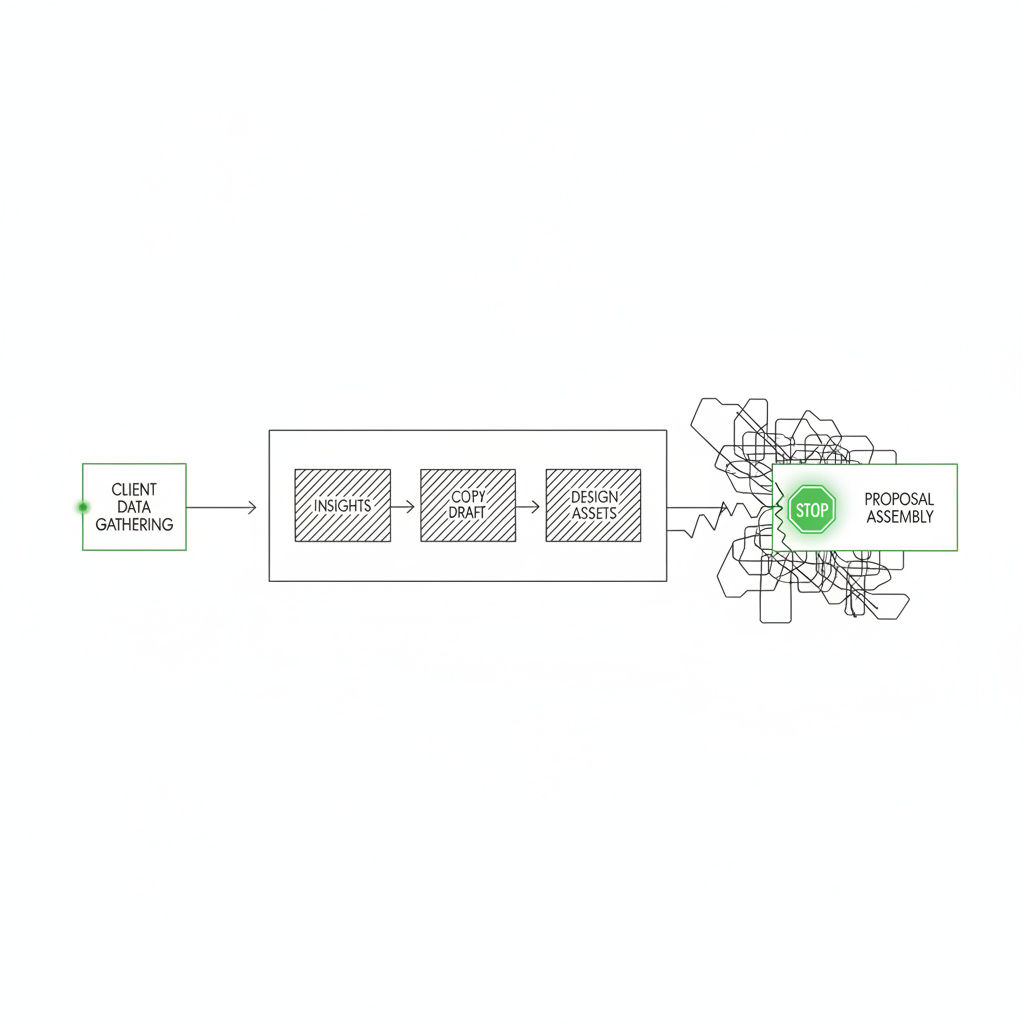
One AI doing your whole proposal from a call transcript will guess your budget and butcher your voice. Instead, run a 2-agent line. One model extracts the facts, you eyeball them, and a second model writes from them. Accurate, on-brand statements of work without the Friday-night rewrite.
It is 9:40pm on a Thursday. The proposal is due to the prospect by noon Friday, and the founder I was talking to had 3 tabs open: a 45-minute discovery transcript, last quarter's winning SOW, and a chat window where she'd just begged a model to "write a proposal from these notes."
What came back read like a horoscope. Warm, vague, confidently wrong on the budget.
So she did what every agency founder does at that hour. She became the editor, fixing the tone, deleting an invented timeline, re-prompting for the deliverables it skipped. We build proposal workflows with B2B agencies, consultants, and coaches every week, and that exact scramble is the opening complaint almost every time.
The ask is always the same: "I want AI to write my proposals from my call notes." Reasonable. But the way most founders try it is exactly what fails, because they hand one chat thread two jobs at once and watch it do both badly.
The fix is an assembly line. A research agent pulls structured client facts from a raw discovery transcript, you eyeball them, then a separate drafting agent turns those facts into a proposal. Two specialized models, one clean handoff, your judgment in the seam. Call it the Proposal Assembly Line.
Why the single mega-prompt creates generic deliverables
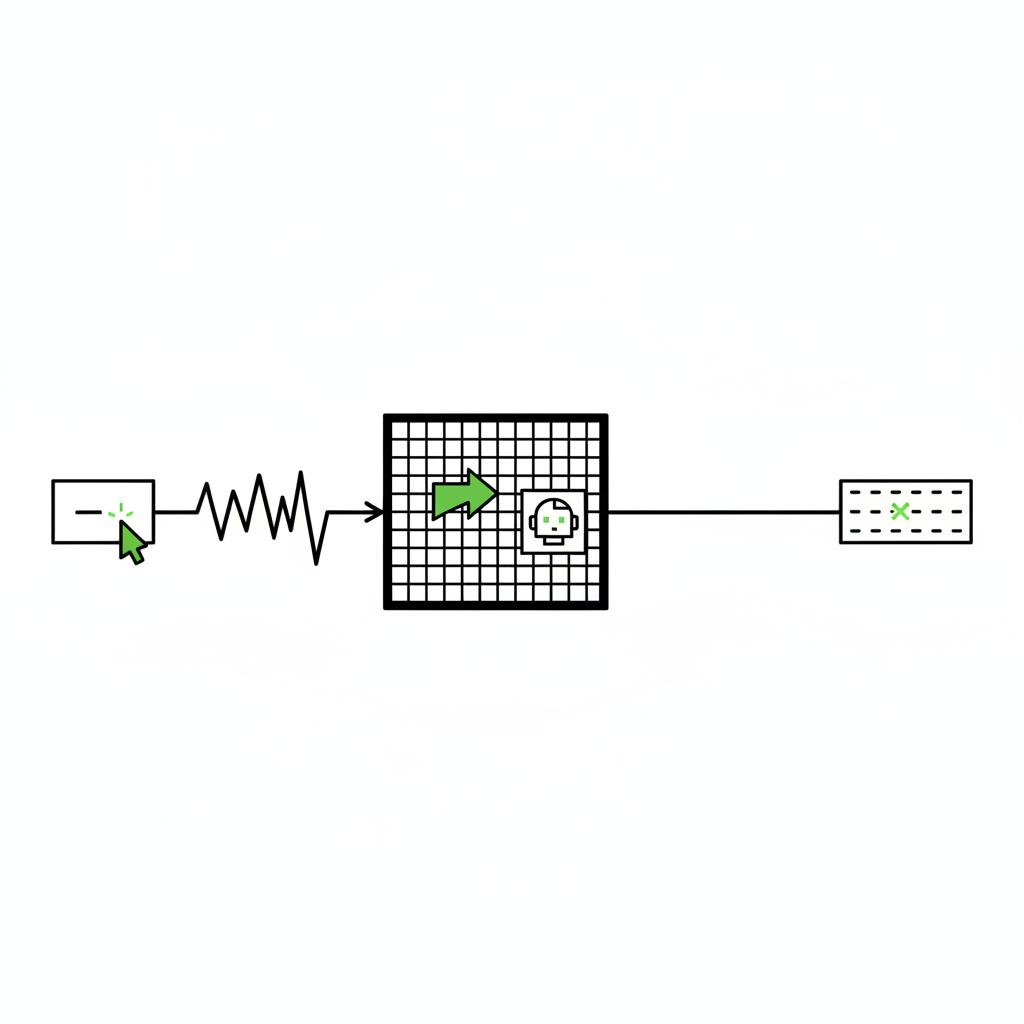
You drop a 45-minute transcript into a chat, ask for a statement of work, and back comes a robotic echo of your own words, budget missing, timeline invented. The reason is that the model is trying to parse a scattered, half-mumbled transcript while also holding your brand voice and your service menu in its head. Two jobs at once, both done poorly. Call it context confusion if you want a name for it.
And then you become the editor. You fix the tone, correct the hallucinated price, re-prompt for the deliverables it skipped. That back-and-forth is the coordination tax eating your billable hours. The mega-prompt didn't save you time. It just moved the work.
One agent extracts, one agent writes
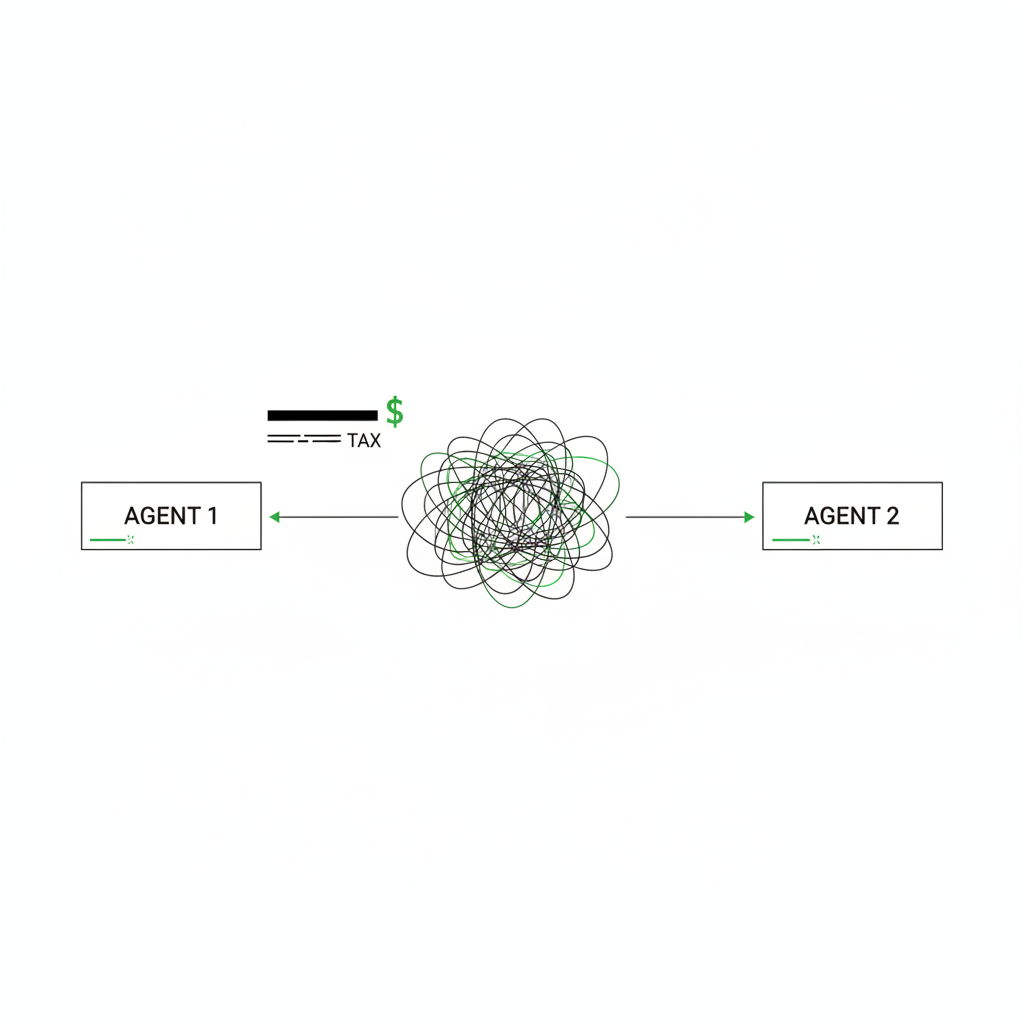
A two-agent line is a connected process where one specialized model finishes a single task and hands its clean output straight to a second model that runs the next step. No single robot does everything. Each agent gets one job, one set of instructions, and one tidy handoff.
This is your agency operating layer, not a tutorial in coding. You don't need to learn prompt chaining theory or wrangle a developer to wire two steps together.
It mirrors your real team. Your strategist distills the messy client notes into concrete requirements, then hands only those requirements to the copywriter. The copywriter never has to sit through the call.
That handoff, done well, is the whole game. We dug into the mechanics in how agencies ship client work without the coordination tax.
Reverse-engineer the line from the proposal you want
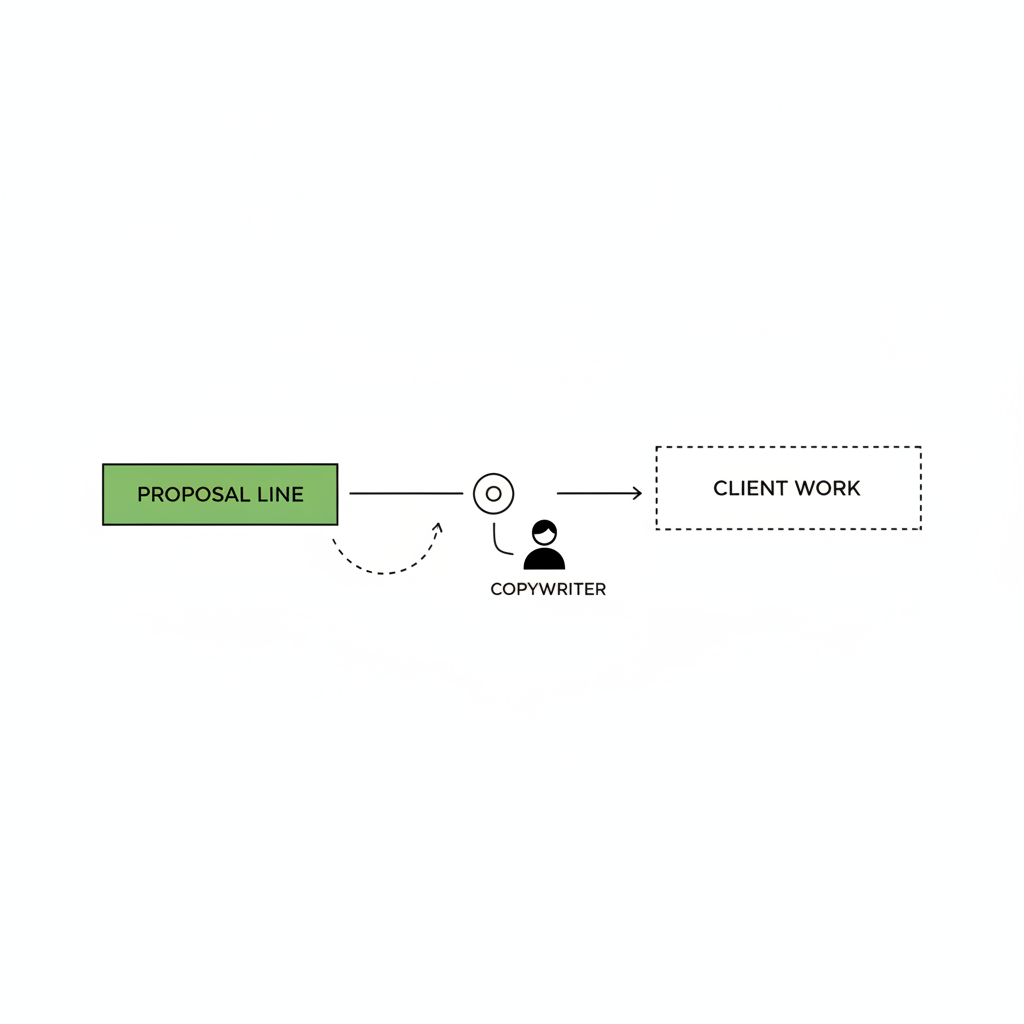
Starting from the prompt is designing the line backward. Start from the outcome instead, a specific on-brand statement of work, and reverse-engineer every step that produces it. Messy transcript in, clean data box in the middle, finished draft out. Two agents, one seam.
The instructions have to be different at each station. The research agent is told to be a cold, literal fact-extractor. The drafting agent is told to be persuasive, on-brand, and structured. Cram both into one prompt and they fight each other.
That separation buys you modularity, which is the real payoff. If the proposal tone is off, you tune the writing agent. If a budget got dropped, you isolate the extraction agent. You fix one station, not the whole line.
And it lifts your revenue per employee one task at a time. We made the case for chained steps over one autonomous bot in AI workflows vs autonomous agents.
Step one: build your discovery research agent
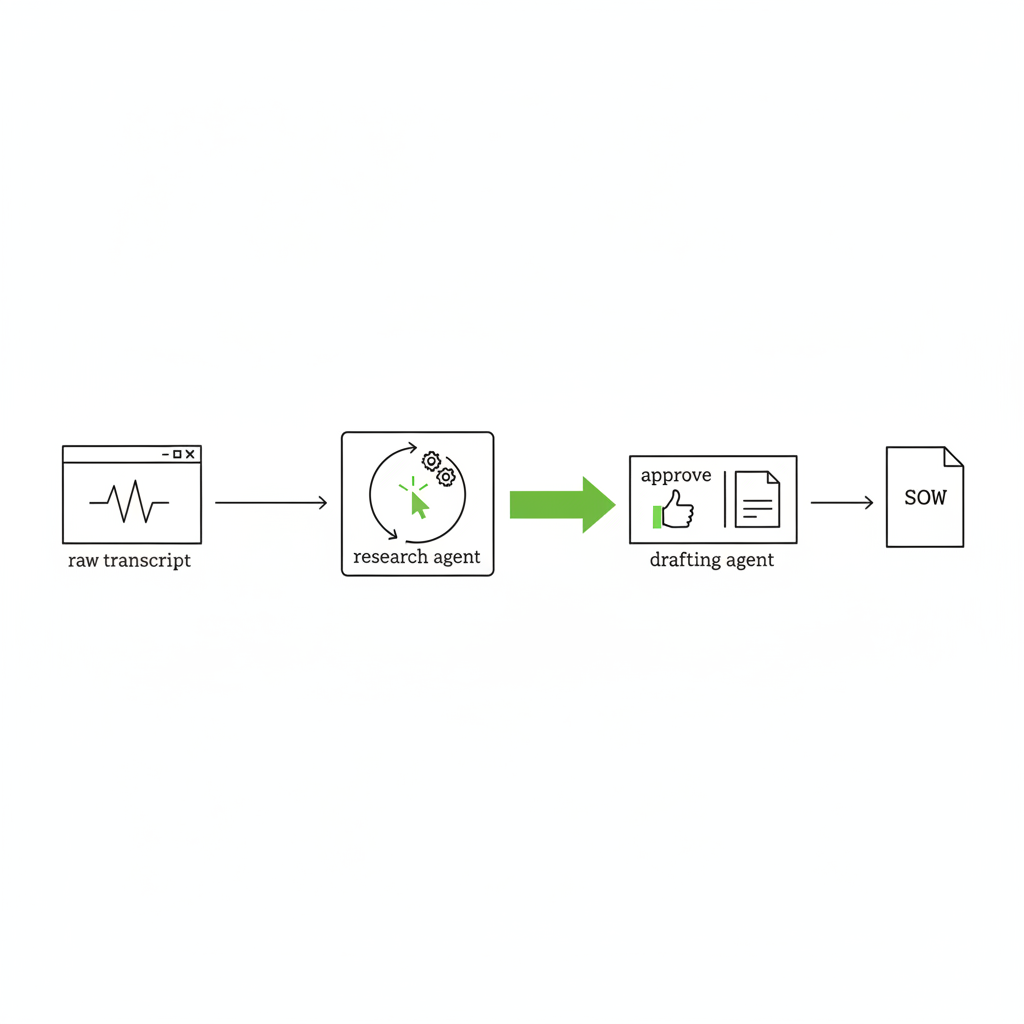
The line starts with the raw transcript from your discovery call, pulled out of your meeting recorder. The research agent has exactly one job: read the mess and extract the facts. No writing, no flattery, no proposal.
Give it stark constraints. Tell it to output zero introductory text and return a strict inventory: named pain points, stated budget numbers, desired timeline, and the specific deliverables the prospect asked for.
- Drop the transcript in (a Fathom export, pasted notes, whatever you have).
- The agent returns a clean fact sheet, nothing else.
- You scan it quickly and confirm the budget and scope are right.
That review step is where your judgment lives. You're not reading 30 pages twice. You're checking a tight summary before it moves down the line, the same instinct behind a solid pre-call prep workflow.
Step two: structure the data handoff and payload
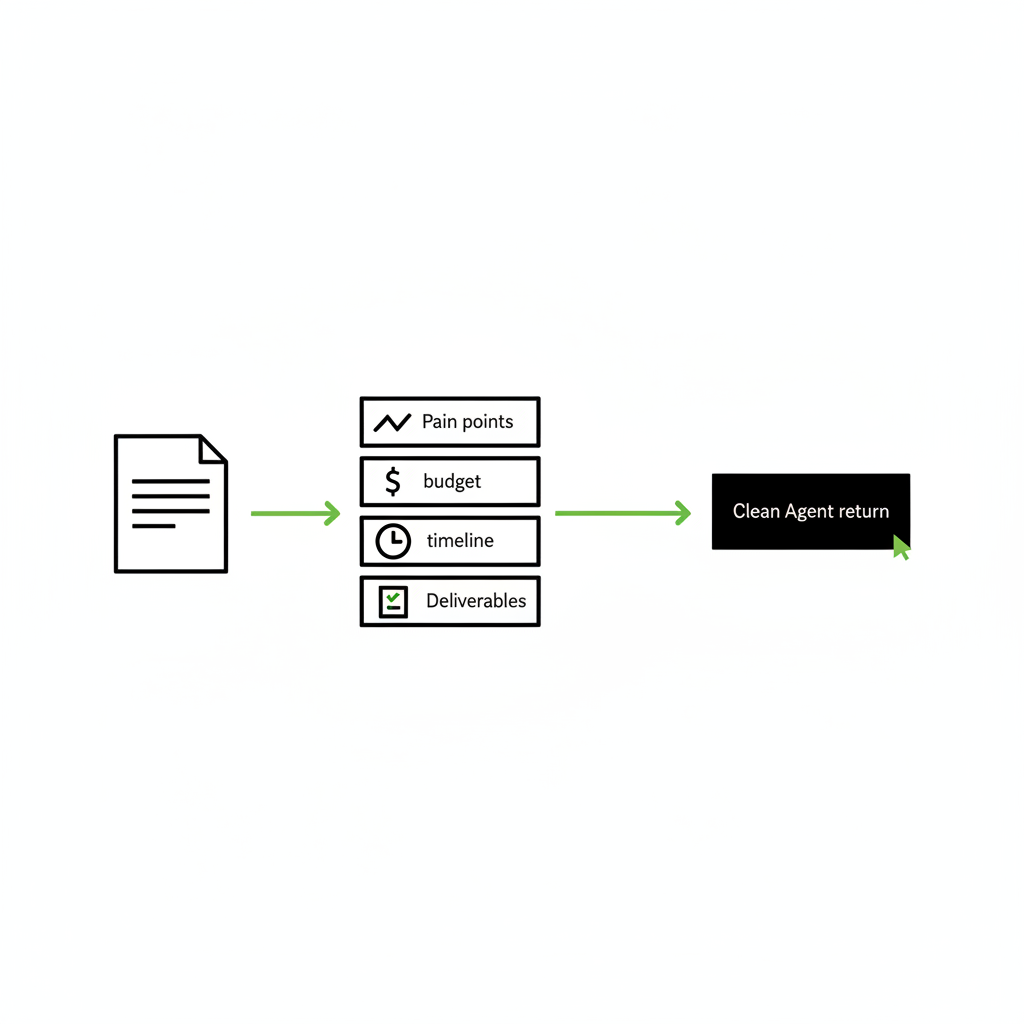
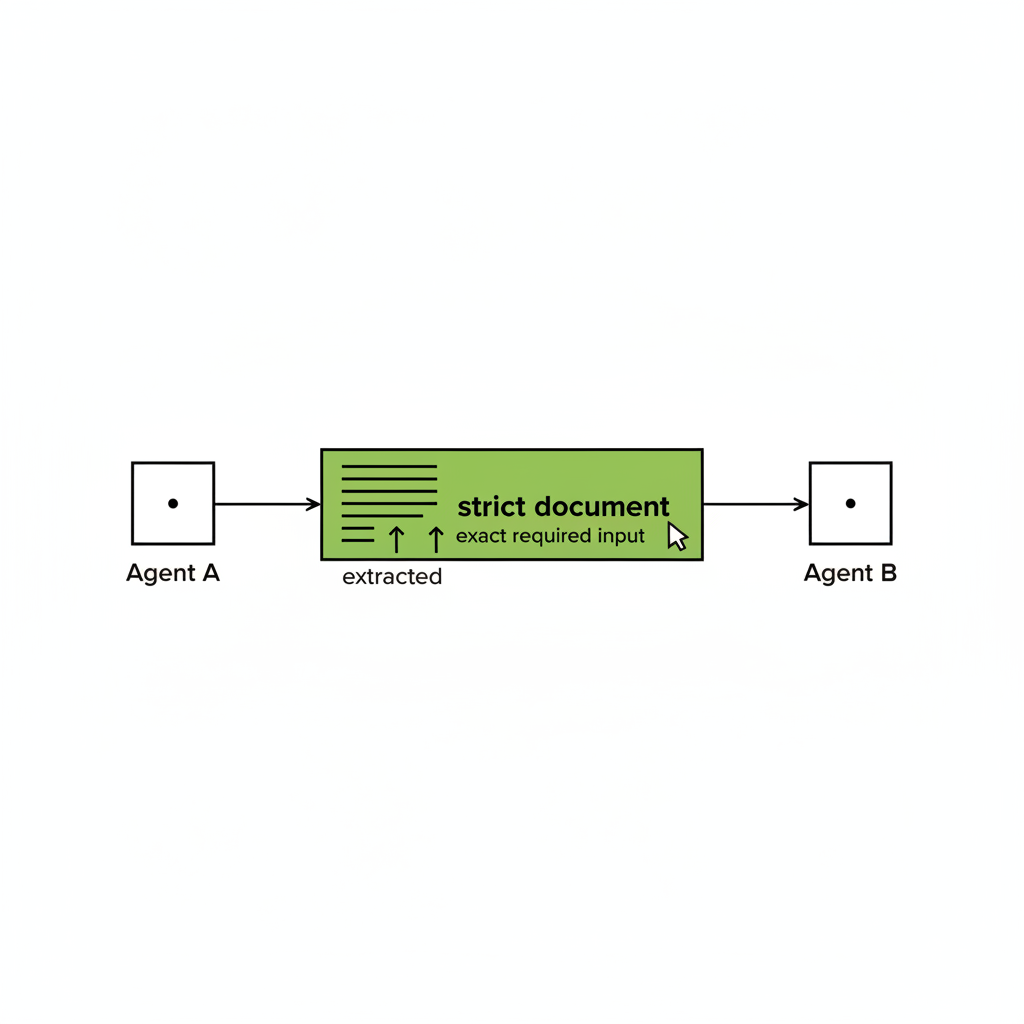
Payload structuring means formatting the extracted facts into a strict document the next agent reads as truth. Agent A's output becomes the exact required input for Agent B. This is the part founders underrate, and honestly it matters more than the writing prompt everyone obsesses over.
Format is everything here. A clean payload, a strict bulleted list or a simple structured block of fields, forces the writing agent to stick to the facts. Hand it prose and it improvises. Hand it fields and it obeys.
For you, that means checking a one-page summary sheet of client facts instead of re-reading the transcript. The modular stack pulls the transcript, moves the payload, and runs the model, and Mozart wires that plumbing so you never have to become a Make engineer. We unpack the underlying logic in stop automating roles, install workflows instead.
Step three: draft the proposal with a writing co-pilot
The drafting agent is a current model like Claude, loaded with your system prompt, your historical winning proposals, and your service menu. You pass the structured payload straight in, and it generates a specific, immediately usable statement of work.
Now the quality jumps. Because this agent never hunts for the budget in a messy transcript, nearly all its effort goes to pacing, persuasion, and brand voice. The facts are settled before it writes a word.
| mega-prompt | proposal assembly line | |
|---|---|---|
| fact accuracy | budget guessed, scope drifts | facts locked before drafting |
| your edit time | rewrite tone, fix price, re-prompt scope | scan facts, light polish, ship |
| fixability | re-prompt the whole thing | tune one station |
Then there's the money. What follows is illustrative template math you plug your own numbers into, annual cost by hand against annual cost to run the line.
| step | how you get it | worked example |
|---|---|---|
| annual salary | the strategist who writes proposals | $120,000 |
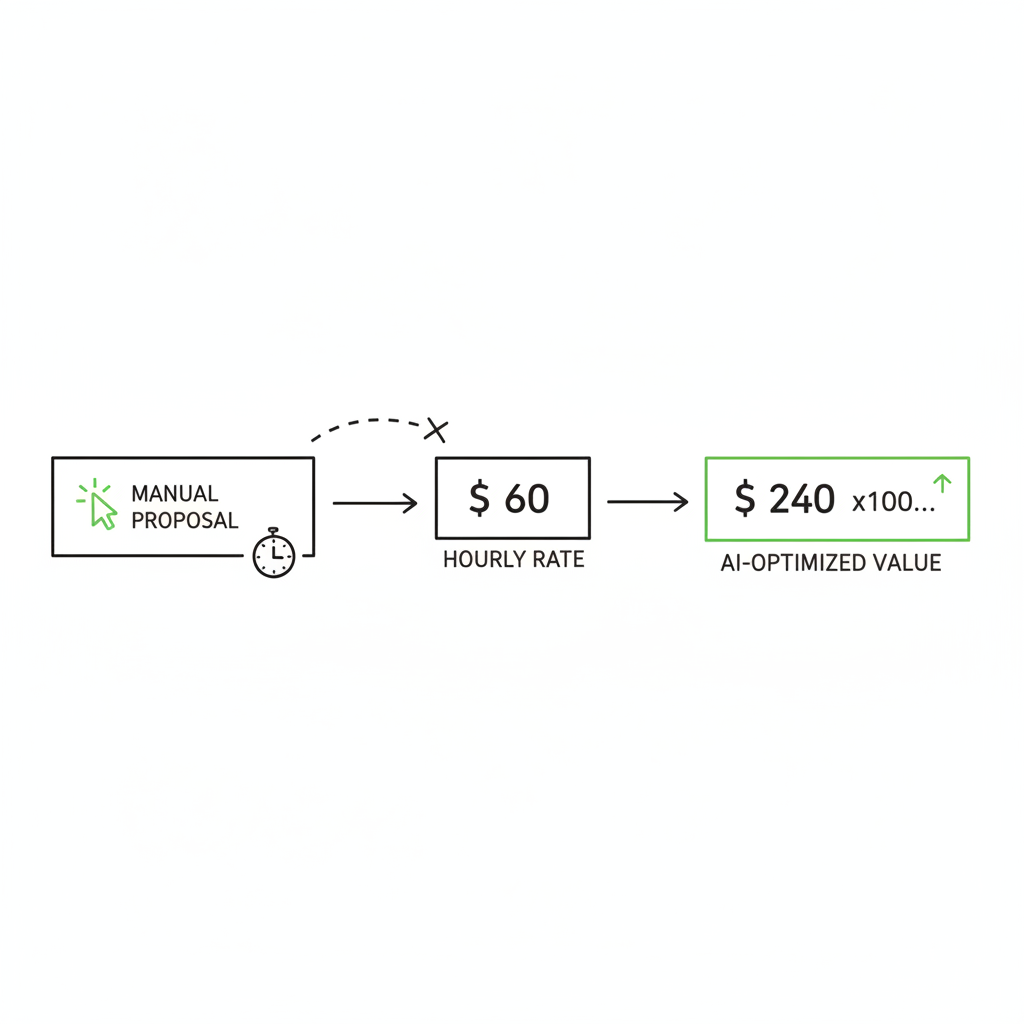
| hourly rate | salary / 2,000 hours | $60/hr |
| hours per proposal by hand | read, draft, fix, polish | 4 hrs |
| value per proposal | hours x hourly rate | $240 |
| annual cost by hand | value per run x 100 proposals/yr | $24,000 |
| annual investment | setup amortized + model and run costs | ~$6,000 |
| net annual savings | cost by hand - investment | ~$18,000 |
| hours reclaimed | roughly 3.5 hrs per proposal back | ~350 hrs/yr |
Those are template numbers, not a measured result. Swap in your own rate and proposal volume. We walked the full build in reclaim unbillable hours per pitch with AI. I don't get my evenings back from this, but your strategist absolutely does.
Install the workflows that protect your margins
This matters because most AI never earns a dollar. A 2025 MIT report, as covered by Fortune, found about 95% of organizations get no measurable return from generative AI, and the gap is installation, not model quality.
95% of organizations get no measurable return from generative AI
MIT report (2025), via Fortune
The mega-prompt is intelligence that dies before it ships. So start small. Install one workflow, put a scoreboard on it (runs per month, hours reclaimed, how often you had to fix the output), then build the next.
Some teams build the muscle and start shipping workflows weekly. The proposal handoff is just a good first one because the pain is obvious and the math is clean.
So here is the move for Monday: pull your last 3 proposals and time, honestly, how long each one actually took you. Then split that job into two stations, extract and draft, and build the first one. The free AI roadmap will map it for you if you'd rather not start from a blank page.

Faq
So how is this different from me just pasting my call notes into ChatGPT?
Pasting notes into one chat is the mega-prompt, and it asks one model to extract facts and write persuasively at once, so it does both badly. The two-agent line splits those jobs: one model returns a clean fact sheet you approve, a second writes from it. More accurate, more on-brand, far easier to fix.
Do I actually need to learn to code to set this up?
No. The logic is plain English: one agent extracts facts, a second writes from those facts. The connective plumbing (pulling the transcript, formatting the payload, routing it to the drafting agent) is wiring, and Mozart handles it so you stay out of the tools.
What's this "payload" thing and why do you keep harping on it?
The payload is the clean, structured fact sheet the research agent hands to the writing agent. Format it as strict fields or bullets and the writing agent treats it as settled truth, which is what kills the hallucinated numbers. It is the single most important step.
I'm slammed. Where do I actually start?
One workflow. Pick either the discovery fact extraction or the proposal drafting handoff, install it, and measure it for a month before adding the next. Small, boring, and compounding beats a big transformation you never finish.