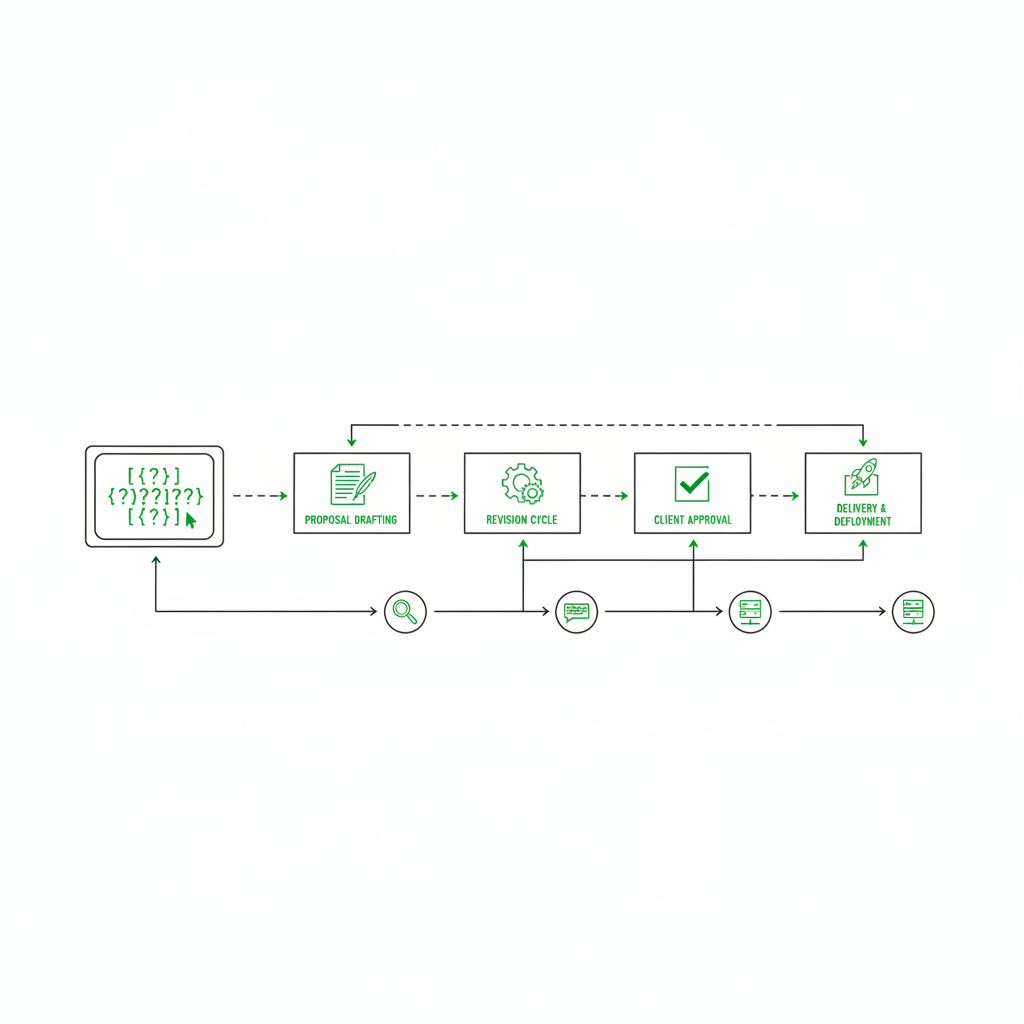
tl;dr: This is the build guide for multi-agent orchestration: how you split client work into single-purpose agents and wire them into one line that runs without you. If you want the full breakdown of what the coordination tax is and what it costs first, start with our guide to the agency coordination tax. This post assumes you already know it is bleeding you and you want the fix.
Multi-agent orchestration is the operating layer that fixes broken client operations by splitting complex work into single-purpose AI workflows. It is Thursday at 8:15 am. You have a massive pipeline review at 9:00 am. A whale prospect just emailed over three dense PDFs of brand guidelines, a scattered notes thread, and a vague budget request. You need a formatted pitch outline, a pricing tier, and a list of scope risks right now.
If you dump that mess into one chatbot, you will get a generic essay and completely hallucinated margins. The fix is a multi-agent workflow. You split the job into narrow agents: one to extract the facts, one to match your pricing scale, and one to draft the email.
An operating layer passes the baton between those agents and your tools. Your team keeps their judgment. The busywork stops draining the P&L.
The proof is in the field. MIT researchers, reported by Fortune, found 95% of organizations get no measurable return from generative AI. The gap is not intelligence. It is installation. Most AI fails because it dies before it reaches the P&L.
What is multi-agent orchestration for a service practice?
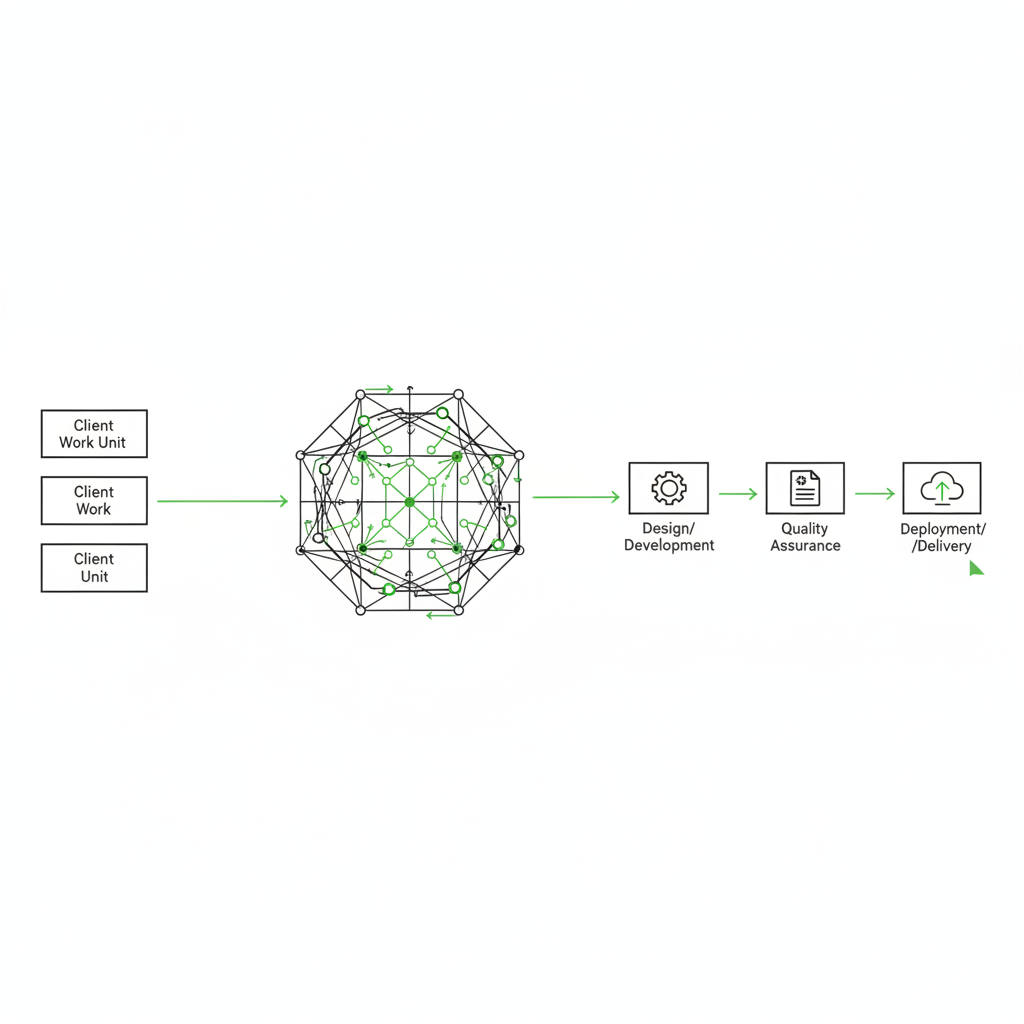
Multi-agent orchestration is an automated workflow where multiple specialist algorithms each do one narrow job, and a central layer passes the outputs between them. In an agency or consulting firm, it means client operations move through a defined assembly line. You never play human router.
Start from the final outcome you want. Maybe you need a finished discovery brief. You reverse-engineer every step, tool, and decision needed to produce it, and wire those into one line that runs without you.
Think line cooks, not one frazzled executive chef. The orchestrator is the expeditor making sure the work around the work moves directly to the right station.
Take initial proposal drafting. One agent pulls constraints from the transcript. Another cross-references your current margins. A third agent drafts the proposal into your document template. Nothing ships until it passes every station.
Why do single models fail at complex client operations?
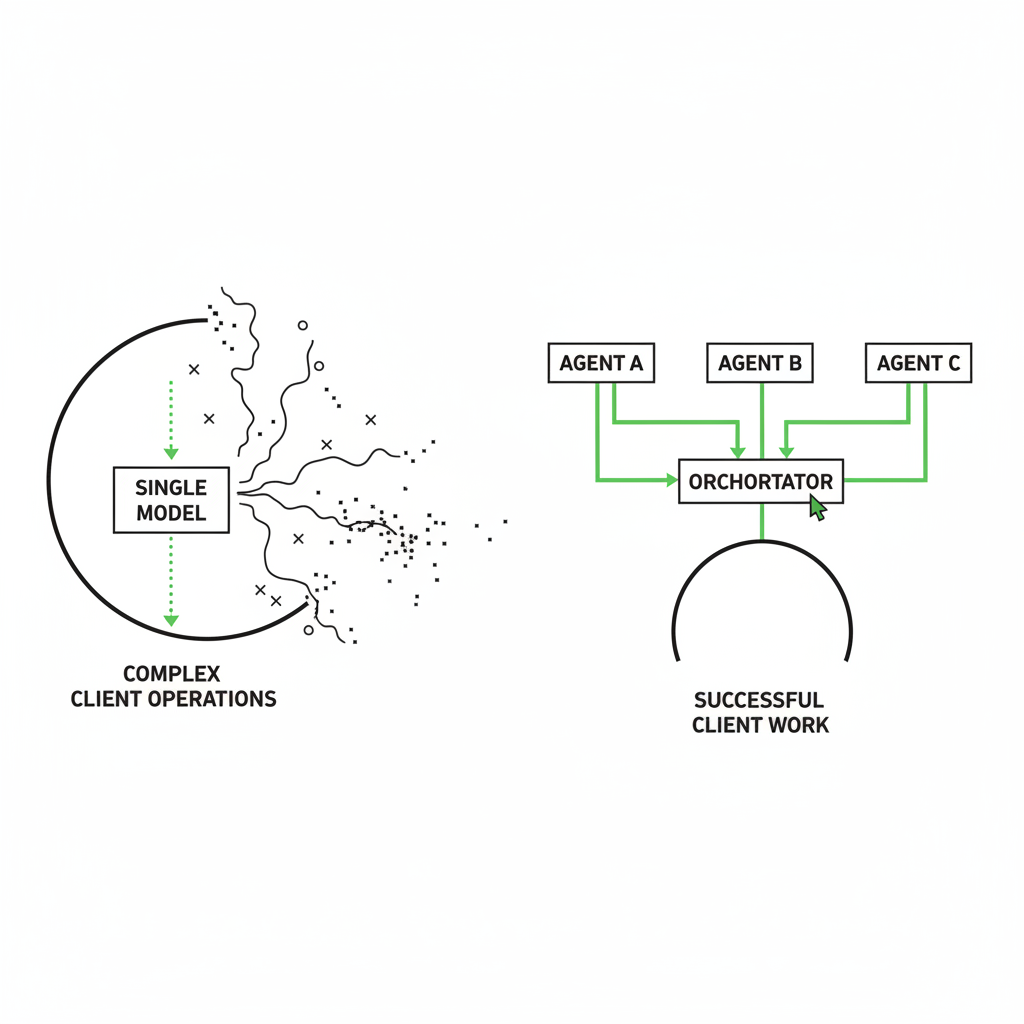
Single generative models fail at complex client operations because placing too many demands in one prompt forces the tool to act as a researcher, writer, and QA at once. Reasoning degrades when context gets too wide, and specific details fall out completely.
B2B service work requires precise deliverables. You have rigid pricing tiers, strict scope boundaries, and client-specific phrasing rules. One chat window simply cannot hold all of it reliably. The model gives you fluent text, and you still spend 45 minutes fixing the billing numbers.
That is why we steer founders toward using structured AI workflows instead of massive autonomous agents. Narrow jobs create clean outputs you can actually trust. If your prompt needs a 12-page training manual to work, it is a workflow. It is not just a prompt.
How does an orchestration layer eliminate the coordination tax?
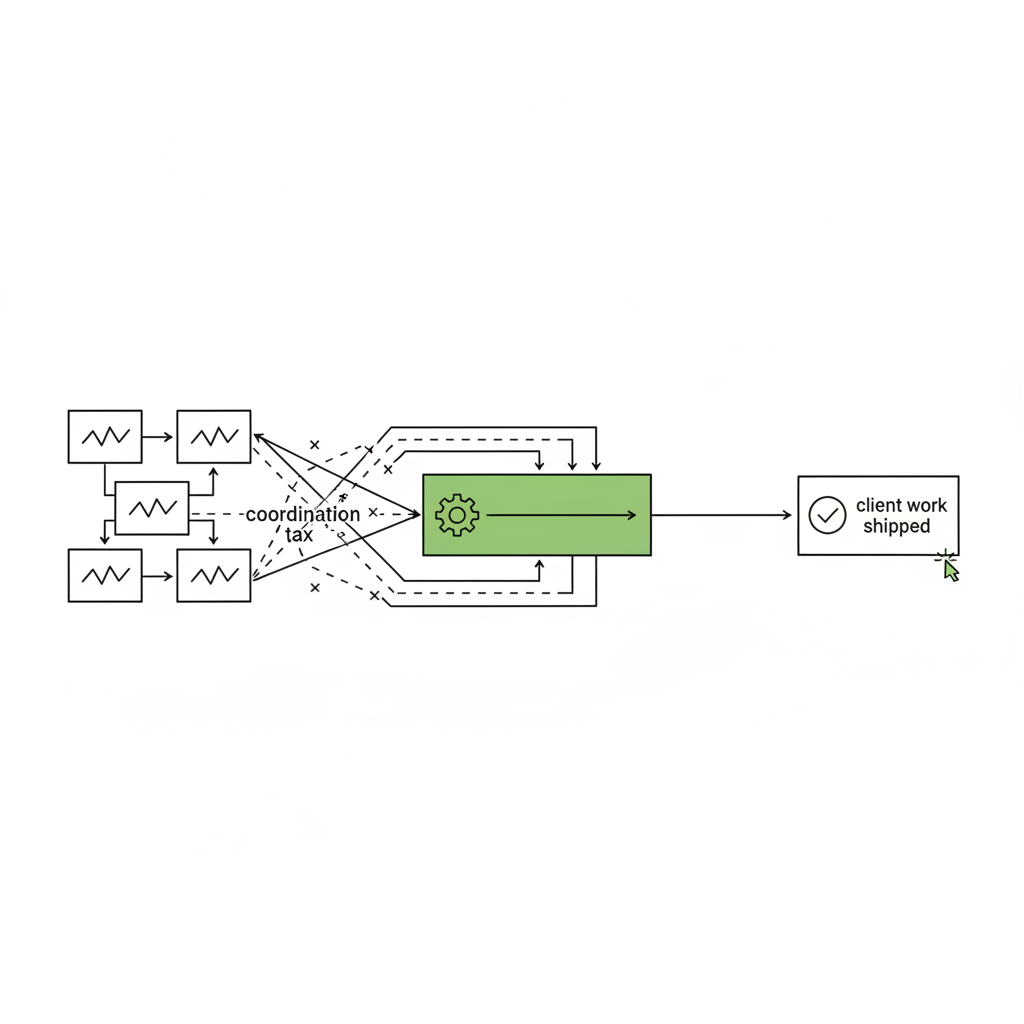
An orchestration layer cuts the coordination tax by automatically moving context and files between your business tools. Instead of relying on manual Slack pings or email forwards, the workflow passes the exact correct structured data to the next step and only stops for your approval.
Copy-pasting between four browser tabs feels like productive work. It is really just manual labor wearing a tech costume. That invisible operational drag strictly limits how many clients your team can profitably handle.
The financial math is not subtle. Industry benchmarks from Lighter Capital put the median startup revenue per employee at $167,500. Every hour an account manager spends fetching analytics or formatting a status update is an hour stolen from billable strategy.
If you want to spot where your agency bleeds time, look at how to measure AI ROI without pretending the dashboard is the engine. An operating layer fixes this by working invisibly inside your existing software stack.
What does a multi-agent system look like for client onboarding?
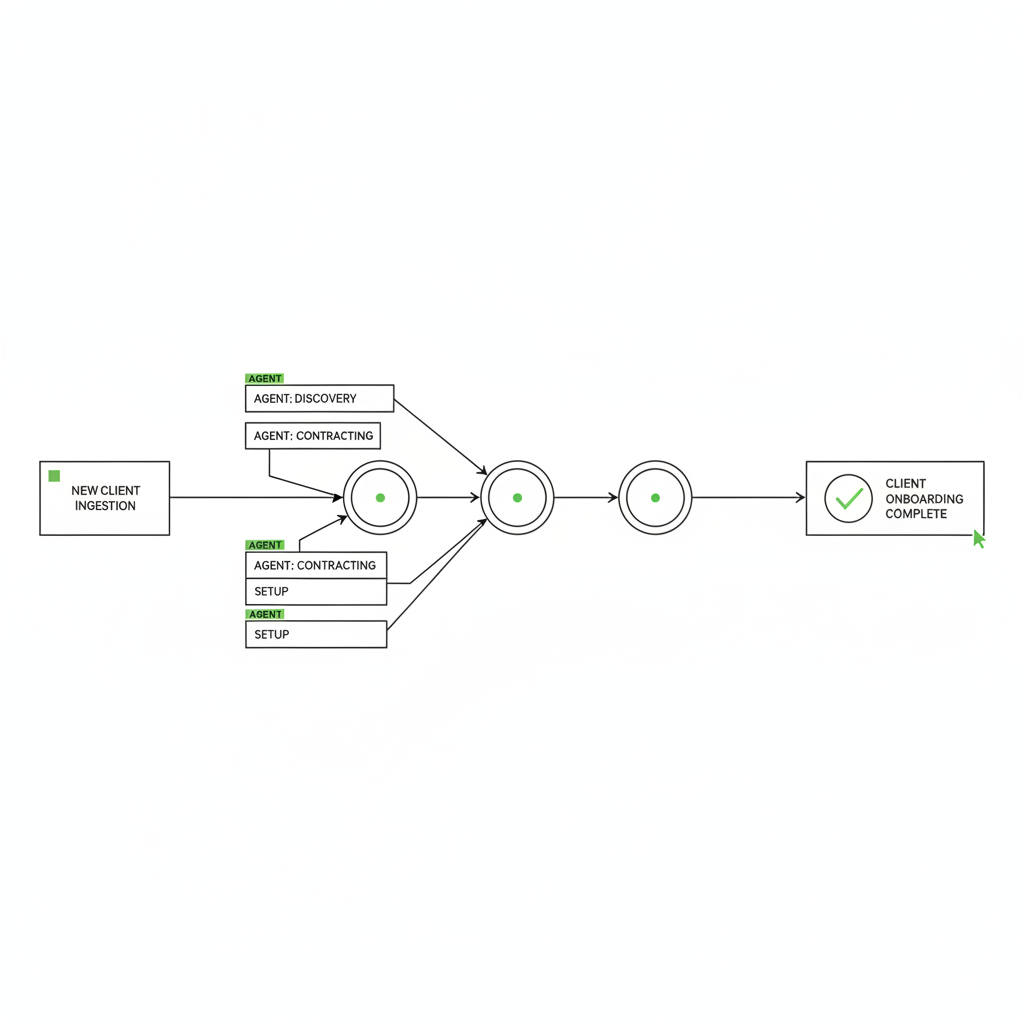
Client onboarding is a perfect multi-agent workflow because it is a fixed sequence with predictable triggers. When a new contract is signed, a chain of narrow agents provisions the software, drafts kickoff materials, and routes everything for your review.
For a fractional executive or B2B coach, this automated line reclaims hours of administrative drag. Start from the required outcome: a prepared kickoff meeting.
- The client pays the Stripe invoice, which alerts Make to start the flow.
- Agent A reads the initial intake form, extracting core goals and immediate project landmines.
- Agent B creates a shared Google Drive folder, provisions a Slack channel, and copies your kickoff doc template.
- Agent C drafts the kickoff agenda using the extracted goals and emails it to you as a localized draft.
You review one drafted agenda over your morning coffee instead of executing manual setup tasks. You still make all the strategic choices. To see exactly how these outcomes compound, review these agent workflows designed to protect your revenue per employee.
Why distribute weekly status reporting across specialized agents?
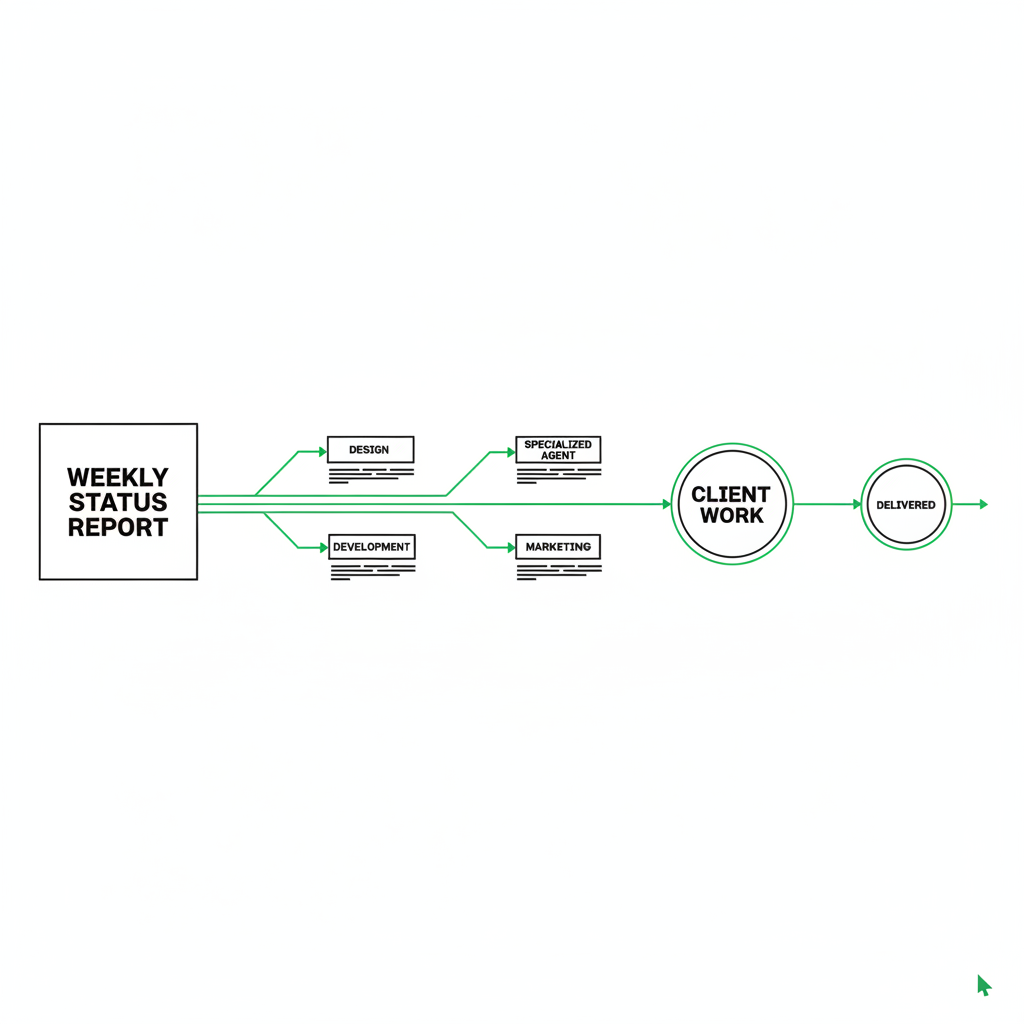
Weekly reporting works as a multi-agent job because it is repetitive, requires heavy tool switching, and has strict deadlines. Split it into specialist agents that fetch metrics, summarize progress, and format the update, and the entire track assembles itself reliably on a schedule.
Gathering report data is not intellectually hard. It is just deeply annoying. That annoyance limits how many accounts one person can manage safely.
Narrow context always wins here. Give a data agent read-only access to HubSpot or Google Analytics, and it brings back clean numbers. Pass only those numbers to an analyst agent to spot the current trend. Hand that trend to a writer agent connected to a current model like Claude to draft the update.
| By hand | With Mozart | |
|---|---|---|
| Execution | Account manager scramble | Specialist agents on a schedule |
| Process | Manual copy-paste across tools | Data pulled and drafted as one update |
| Quality | Missed metrics, broken tables | Validation plus a human checkpoint |
Mozart gave us back the Friday afternoons we used to lose to reporting. The updates just show up now, and they are better than what we shipped by hand.
Mozart customer
Consistent proactive updates protect the client relationship. The relationship dictates whether the retainer renews. You simply stop asking your expensive people to do the work around the work.
How do you build an AI roadmap for multi-agent workflows?
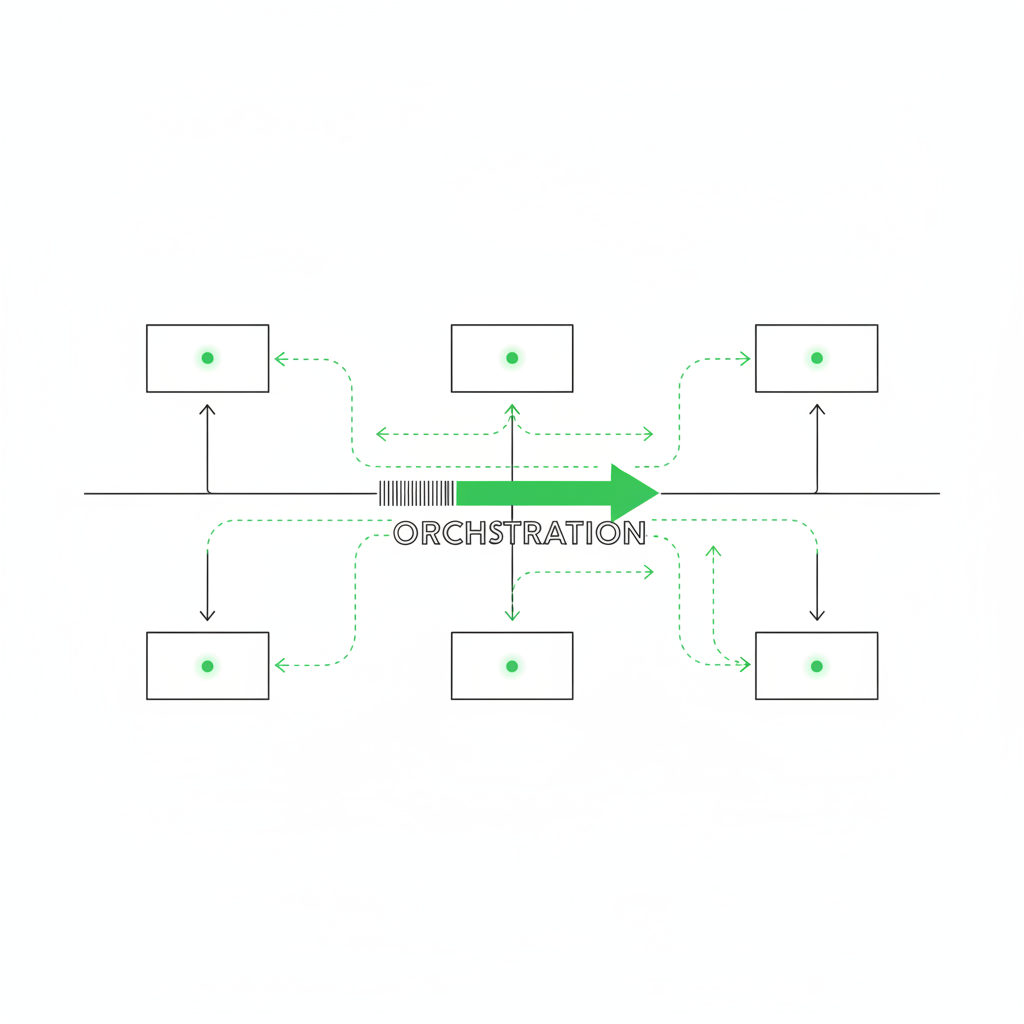
You install an AI roadmap by building one multi-agent workflow at a time based entirely on business impact. Pick an operational drag tied directly to revenue, define the exact outcome, and wire the tools together until you achieve complete boring reliability.
Gartner data is blunt about the alternative. The firm predicts that over 40% of agentic AI projects will be canceled by the end of 2027. Teams fail because they tolerate ambiguity, unclear ownership, and poor controls.
But the shift remains inevitable. Gartner also expects 40% of enterprise applications to include task-specific AI agents by 2026. That pressure rolls downhill into your clients' expectations very fast.
To spot where to begin your audit, look at what an AI chief of staff actually tackles in a given week. Or we can build the exact blueprint for you.
Get your roadmap. For a one-time $1,000 audit, we map your highest-impact workflows, rank them by impact, risk, and ROI, and hand you a 90-day plan delivered in 7 days. Afterward, a managed Mozart agent runs them so your team stops serving as the router for your agency software. Pick one messy process, reverse-engineer it into a clean line, and take your time back.

Frequently asked questions
Is multi-agent orchestration overkill for a small agency?
No. Small service practices feel the coordination tax the hardest because the founder is both the lead strategist and the janitor. Installing just one workflow with three narrow agents parsing, drafting, and routing beats paying a human to do it.
How is this different from pasting context into a chatbot?
A single chatbot loses its reasoning ability when it juggles multiple tools, strict constraints, and broad context at once. Multi-agent orchestration splits the job among specialist agents to preserve clean data. An operating layer passes the structured data efficiently so work moves forward without manual copy-pasting.
Do I lose control over client deliverables with an automated layer?
You keep complete final review. The automated agents handle the tedious assembly, like fetching raw analytics and staging emails as formatted drafts. Everything stops at a human checkpoint before it ever reaches a paying client. You lose the busywork, but you keep your judgment.
What tools do these orchestration workflows actually run on?
They run entirely on the tools you already use every day. Triggers can fire directly from Stripe, HubSpot, or your internal CRM. Routing typically happens in an automation platform like Make. Reasoning comes from a current model like Claude, and the final outputs land directly in Google Docs, Slack, or Gmail.