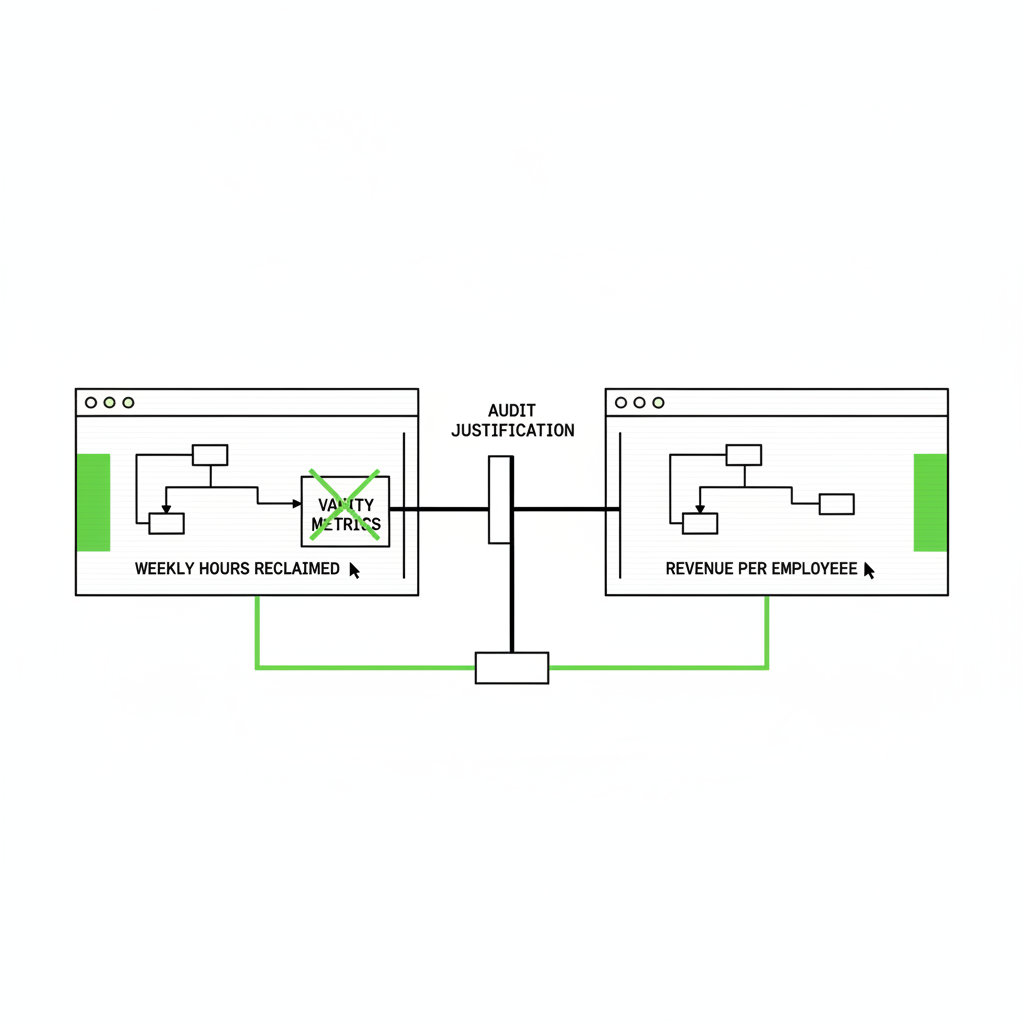
Ignore the software screenshots promising 800 percent returns.
The honest picture is rough. MIT's State of AI in Business 2025 found that about 95 percent of organizations get zero measurable P&L return from generative AI, despite an estimated $30 to $40 billion in spend.
If you run an agency, consulting practice, or coaching business, you cut through that noise with 2 numbers that hit the P&L: weekly hours reclaimed, and revenue per employee.
It is 6:47pm. The family is at dinner. The proposal still is not done because the discovery notes and the CRM do not agree on what the client asked for.
Across the installs we run for agencies, that scene is the real problem, not model quality. Most AI dashboards track prompts, tokens, and productivity scores. None of that tells me if you shipped client work faster, billed more, or got your Friday night back.
The MIT report points at the same gap. What separates the winning 5 percent from everyone else is installation and integration, not a smarter model.
A badly installed tool does not just fail to help. It creates new coordination work that quietly drags down your margins.
For a founder who is both CEO and janitor, ROI is simple. Did this workflow give you hours back, and did it let your existing team carry more accounts?
why do most AI ROI metrics fail B2B service founders?
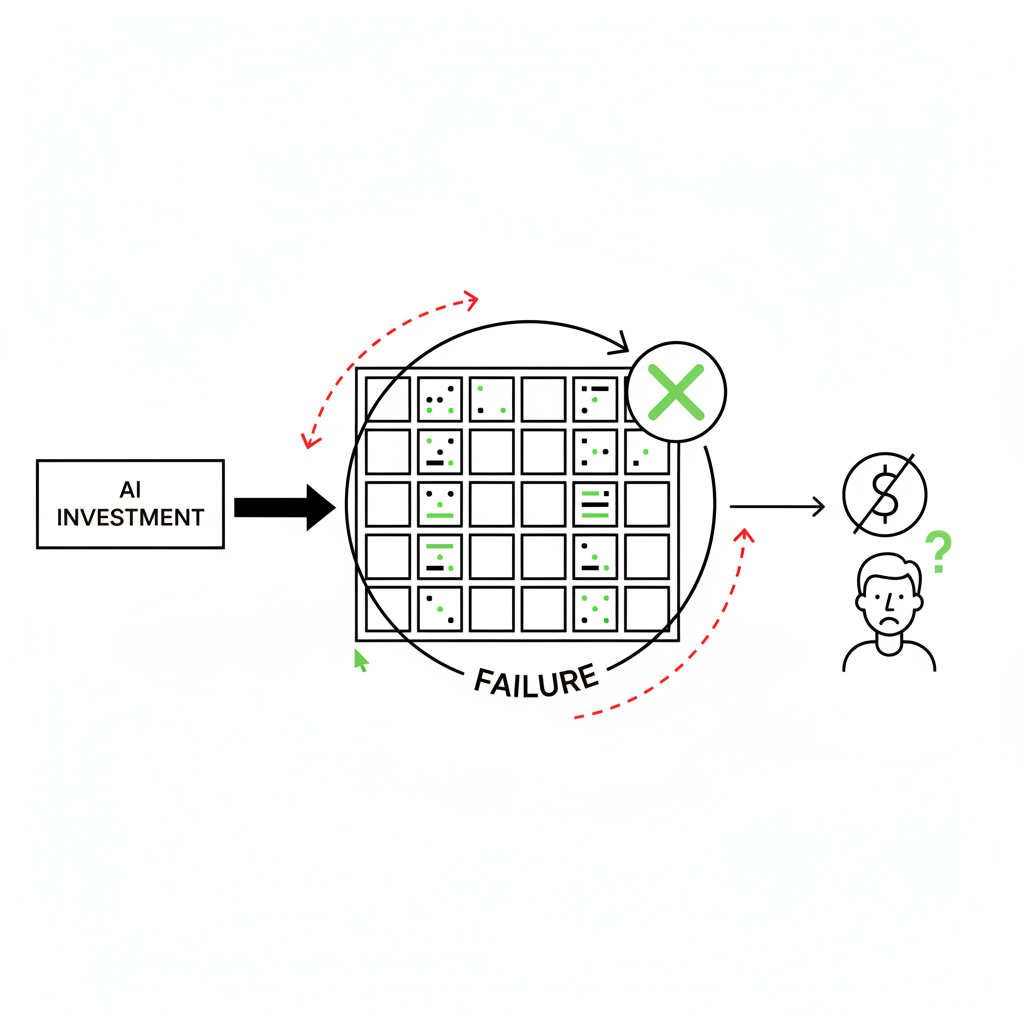
Most AI ROI metrics fail because they track software engagement instead of business output.
McKinsey's State of AI reports that 65 percent of organizations regularly use generative AI in at least one business function, yet few capture real bottom-line value.
Counting prompts proves usage, not profit. A time-poor service founder needs to know one thing: did this ship client work faster?
The problem is usually a co-pilot that needs endless babysitting. If you re-prompt a chat box 15 times a day to get a simple recap right, you are not reclaiming time. You are just moving the mess from Word to a browser tab.
The fix is boring, and it works. Move away from conversational chat and install an agentic workflow that runs the way you direct it.
An agentic workflow is a reverse-engineered assembly line. Start from the outcome you want, like a completed weekly status report, map every step and tool needed to produce it, then wire those into one line that runs automatically.
If you want a menu of outcomes worth building toward, our list of 50 AI use cases you can steal is written for B2B service firms.
how do you measure weekly hours reclaimed accurately?
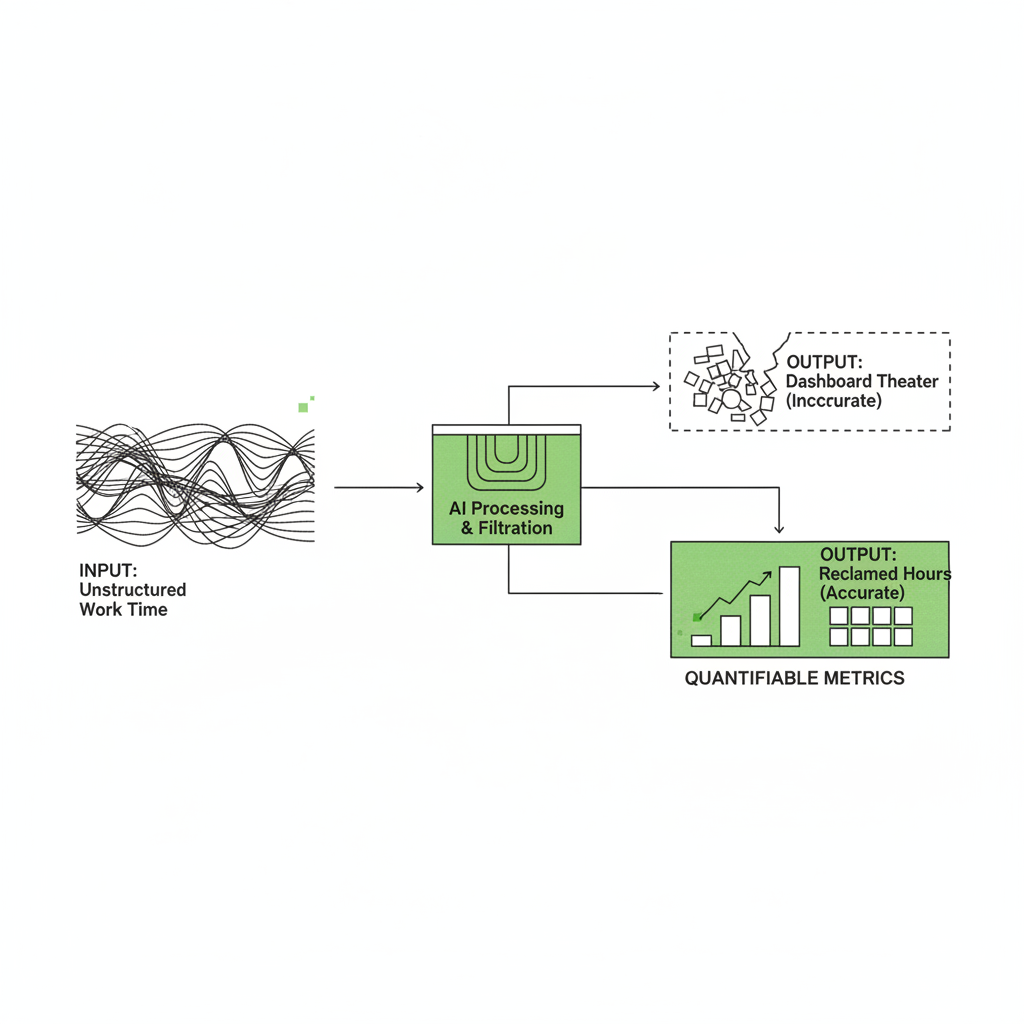
You track hours reclaimed by timing a manual process first, installing an automated workflow, then logging the difference.
This anchors your return to a real baseline instead of vibes. It is the one number most of the failing 95 percent never bothered to capture.
Picture this inside your own agency. It is Friday, the recap is due, and you are still copy-pasting numbers from 4 tabs.
Those manual tasks hide in the cracks of your calendar. Then they ambush you at 6pm. Every week.
Do the math in minutes. Say a discovery recap takes 45 minutes by hand, and a workflow built from your call transcript ships a clean draft in 4 minutes.
You reclaimed 41 minutes. You win the setup once, then the savings repeat on every call. These are illustrative numbers from installs we run, not universal averages, so time your own baseline.
| Weekly client task | By hand | With Mozart |
|---|---|---|
| Discovery call recaps | 45 min each | 4 min each |
| Client status reports | 3 hrs/wk | 15 min/wk |
| Proposal first drafts | 90 min each | 10 min each |
how do you turn reclaimed hours into a real ROI number?
Once you have a baseline, the math is one clean line.
Monthly value = (hours reclaimed per week x blended hourly rate x 4.3) + any new revenue enabled. Monthly cost = tool subscription + amortized install time. ROI = (value - cost) / cost. Payback = install cost / monthly net.
Here is a worked example with illustrative numbers. A proposal workflow reclaims 8 hours a week at a blended $100 an hour: 8 x 100 x 4.3 = $3,440 of monthly value.
Add say $1,000 in new revenue from faster turnaround, for $4,440. The tool runs $200 a month, and a one-time 10-hour install at $100 amortized over 12 months adds about $83, so cost is roughly $283.
ROI is ($4,440 - $283) / $283, north of 1,400 percent monthly. An install cost of $1,000 divided by $4,157 net pays back in under a week.
| Workflow | Baseline | After | Hrs saved/wk | Blended rate | Monthly value | Tool cost | Net | Payback |
|---|---|---|---|---|---|---|---|---|
| Proposal drafting | 90 min | 10 min | 8 | $100 | $4,440 | $283 | $4,157 | <1 wk |
One honest caveat: reclaimed hours are capacity freed, not realized profit. They only become ROI once you put them to work.
Redeploy the hours into active outbound that fills the pipeline. Or into quarterly reviews with churn-risk clients before they leave. Or into easing team burnout so you keep the people you already trained.
is revenue per employee still the best benchmark for agencies?
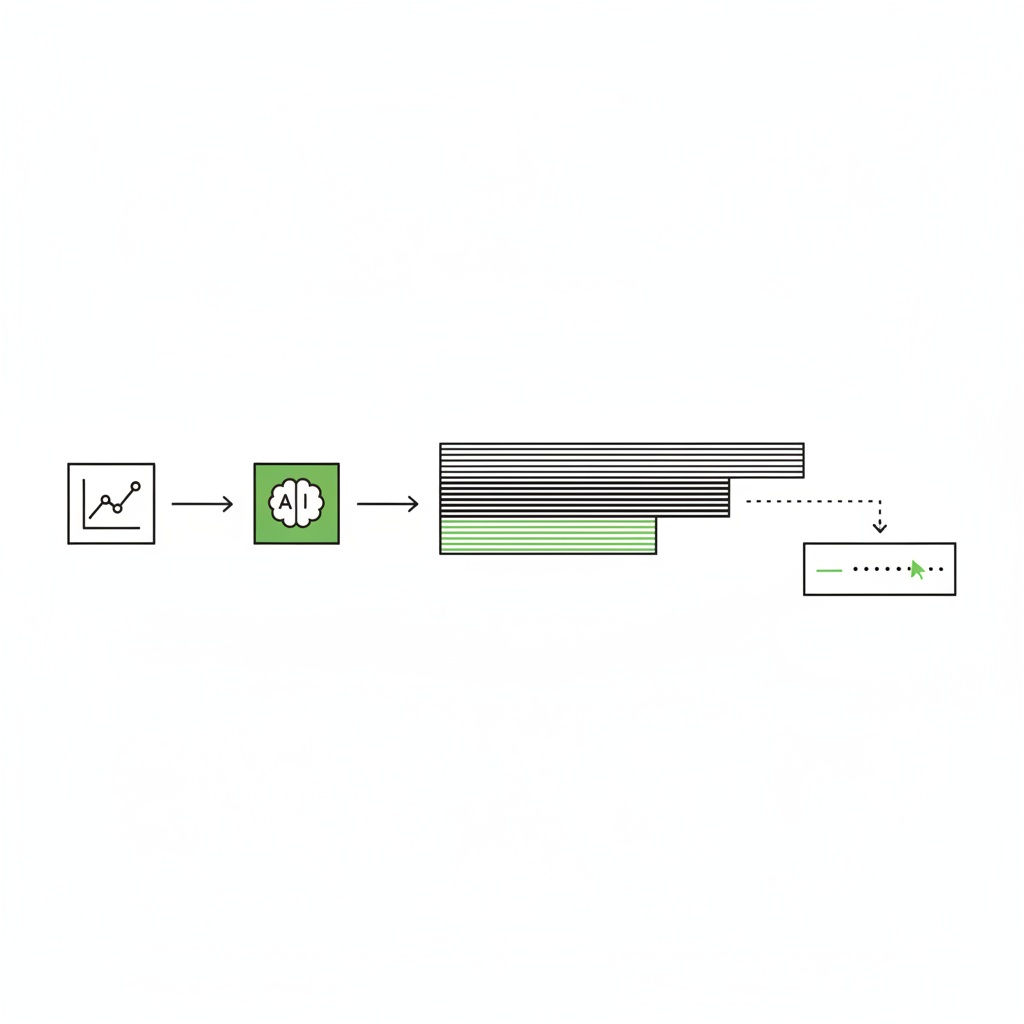
For an agency, the sharper version of revenue per employee is revenue per billable FTE and effective hourly rate.
Those reflect whether your senior people produce more value per hour, which is what AI actually moves.
Private B2B SaaS runs a median around $167,500 in revenue per employee. Treat that as directional context only, since a SaaS seat metric does not map cleanly to a service firm.
Here is the mechanism. Take a 5-person agency reclaiming roughly $52,000 of annual capacity.
Pour those hours back into fulfillment and the same team carries 5 accounts instead of 3, without sacrificing quality. The numerator climbs while the denominator holds.
Cutting staff to juice the ratio is the classic false signal. You want output per billable head rising because the busywork disappeared, not because you fired someone.
So pair effective hourly rate with weekly hours reclaimed for a true snapshot. We laid out the concrete math in three real AI agent examples that protect agency revenue per employee.
which client workflows show the fastest measurable impact?
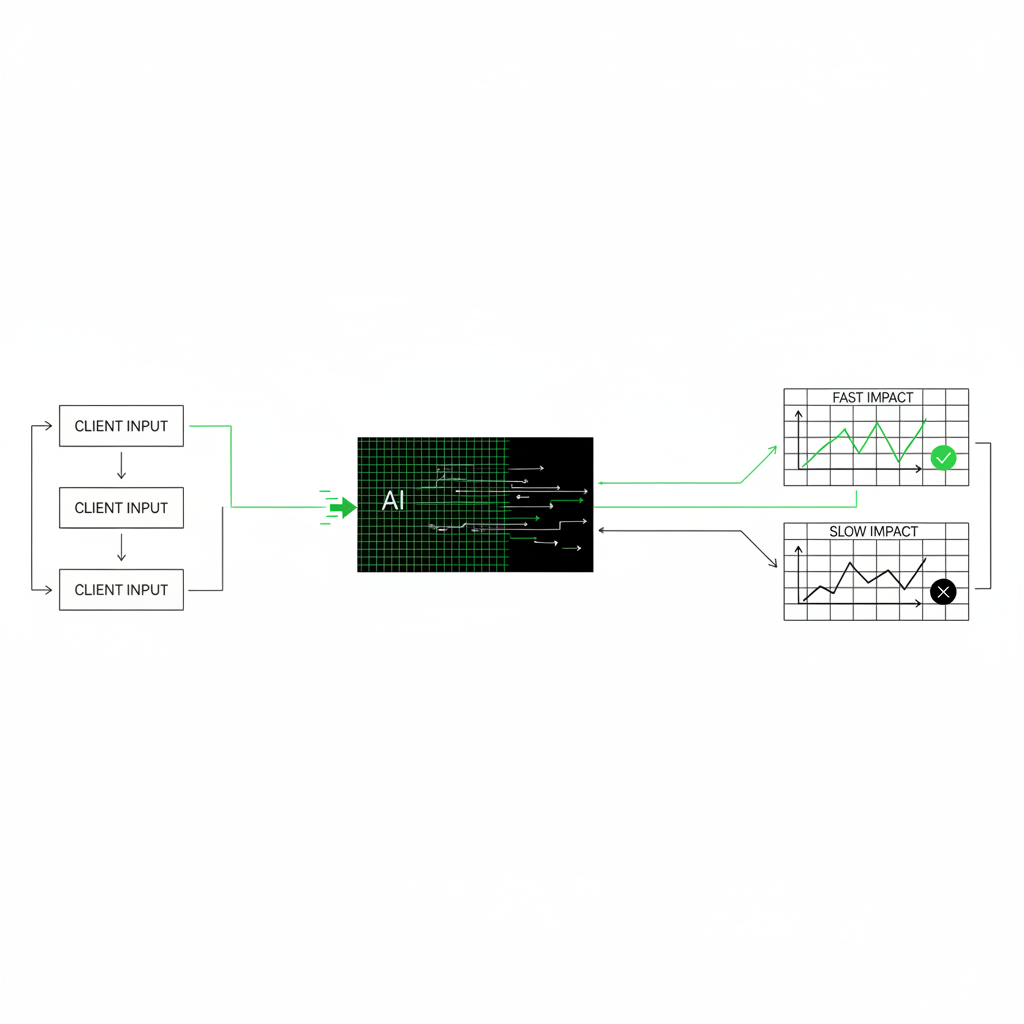
The fastest measurable impact comes from document-heavy, rigid client work like lead qualification, discovery recaps, and proposal drafting.
They have distinct before-and-after timings, so you can log reclaimed hours in week 1 instead of waiting out a vague adoption phase that usually never pays back.
Start with 1 workflow. Trying to automate your entire practice in a weekend is exactly how installs die.
Pick the task that makes your senior team groan, then build the assembly line. Here is how the proposal workflow actually connects:
- The call transcript comes out of Fathom and lands in a shared folder automatically.
- Make hands it to a current model like Claude, which pulls scope, budget signals, and timeline.
- The finished draft lands in your doc template, using your existing pricing tiers.
- The clean draft hits your inbox for a 5-minute human review before you send.
A 90-minute proposal becomes 10 minutes on the same day. You reclaim 80 minutes per document.
Across 6 proposals a week, that is 8 hours back, redirected from copy-paste into outbound.
Agencies running this see it add up.
One recent workflow we shipped saved us over $12,000/year and we're installing a new one every week.
Nehal Kazim, founder of Ad Pros
Outreach campaigns are another strong early target, because sorting initial replies is pure routing work. A workflow that handles objections overnight cuts management drag immediately.
We break down those tradeoffs in AI SDR vs. human SDR.
how do you build an AI roadmap based on your P&L?
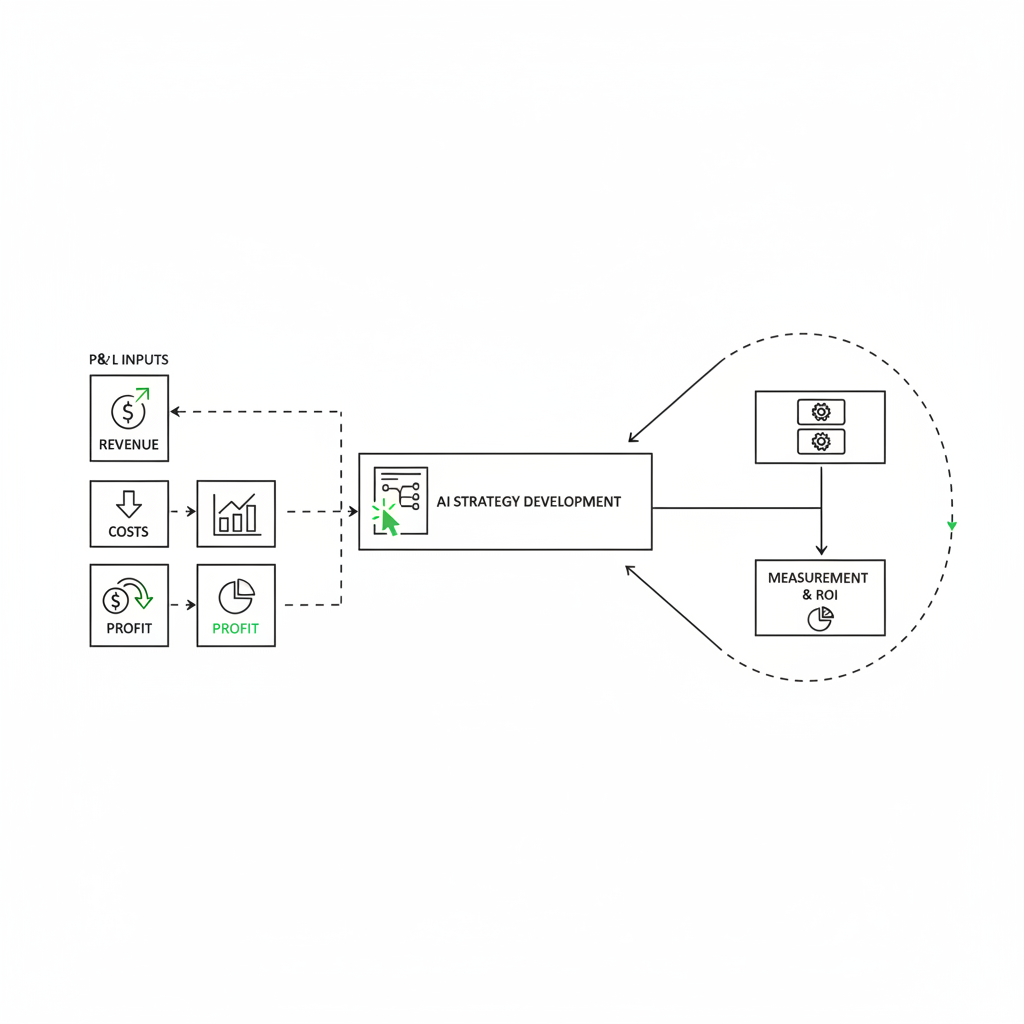
A good roadmap sequences workflows by business impact, implementation risk, and return.
You start with your single largest leak of billable hours, so the first system you install is the most profitable one. This is the discipline that separates the 5 percent who capture value from the rest.
Remember why most AI fails: installation, not intelligence. You buy the seat, your team is too busy fighting client fires to learn it, and it becomes another tab you feel guilty about.
Find the biggest leak of billable hours, then install 1 straight line at a time.
To see how an operator organizes these priorities, our guide on 60 ways an AI chief of staff handles your work works as an audit list against your own calendar.
You already know where your agency leaks hours. When you are ready to fix it, start with the AI roadmap, a one-time $1,000 audit that maps your highest-impact workflows, ranks them by impact, risk, and ROI, and hands you a 90-day plan in 7 days. Get your roadmap.

FAQ
What is a realistic AI ROI for a small agency?
Realistic is boring and profitable. Time 1 workflow you run every week, like drafting proposals or status reports. Most founders are surprised how quickly 5 to 10 hours a week appear once the busywork stops repeating, which at a blended $100 an hour is roughly $26,000 to $52,000 in freed capacity a year. If a vendor promises 800 percent returns, ask for the exact numeric baseline they timed it against.
How long before I see measurable returns?
Fast if you start small. A single workflow like a proposal that drafts itself from discovery notes can show reclaimed hours in the first week. That is because you are comparing it against a real manual baseline you already established. The savings then repeat on every proposal you send.
Do I need to replace my team to get AI ROI?
No. The goal is to give your existing team more capacity, not shrink it. The software carries the tedious work so your people can handle more accounts and apply their judgment. Revenue per billable head should rise because output rises, not because you cut the denominator to fake the math.
What should I measure first?
Pick your most repeated weekly task, time exactly how long it takes by hand for one week, then install one agent to run it. Log the new time. That plain before-and-after number is more honest than any dashboard, and it tells you in week one whether the workflow earns its keep. If you want help picking which task to start with, the roadmap audit ranks them for you.
The agencies that win with AI are not the ones with the smartest model. They are the ones who timed one painful task, installed one clean workflow, and then spent the reclaimed hours on something that grows the business.