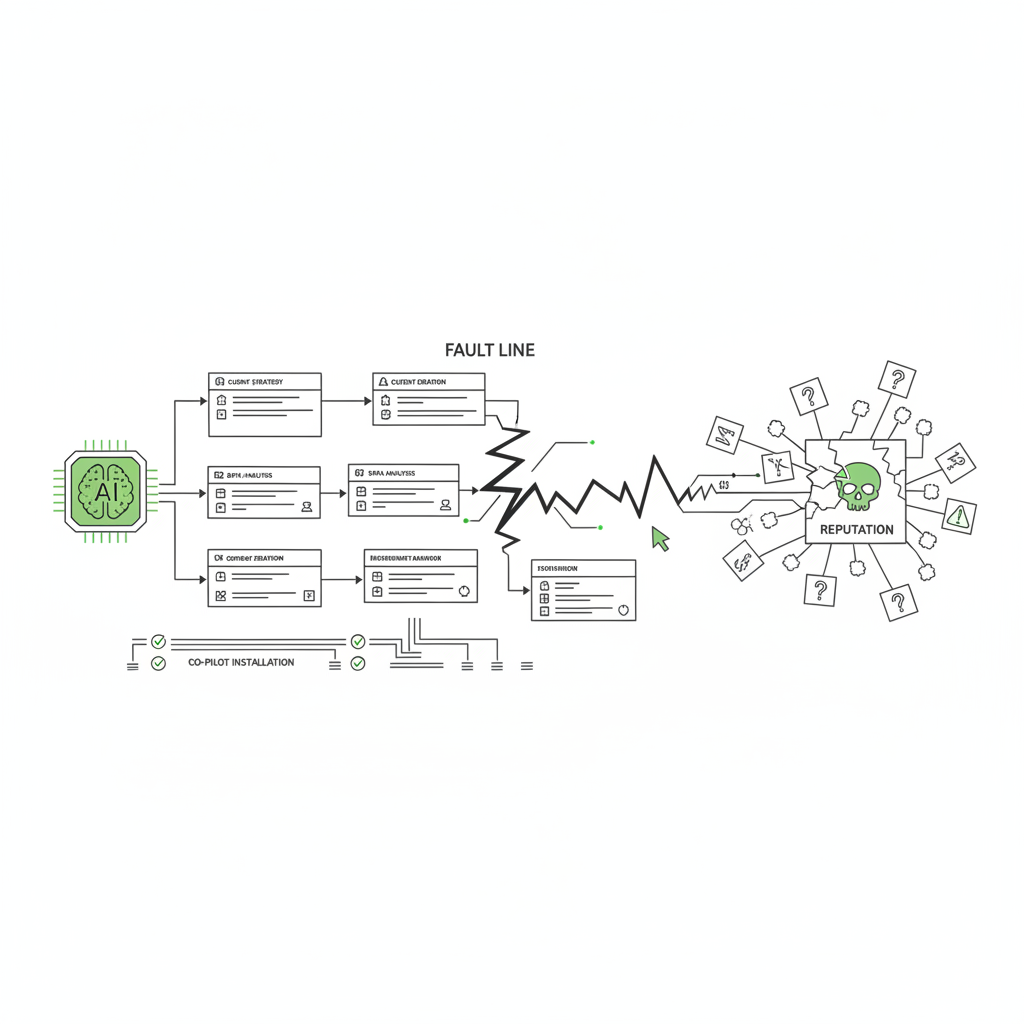
tl;dr: co-pilot or full autonomy is the real fork in the road, and for client work the answer is human-in-the-loop every time. A bot that runs solo on pricing, scope, or client comms is a liability, not a lever. AI should prepare the work and let your operator press send. If you want the broader build case (the specific agent builds that move the P&L), read our guide to the AI agent examples that protect agency revenue per employee.
This is not a build-list post and it is not a measurement post. It is the build-philosophy fork: do you hand client work to a fully autonomous agent, or install a co-pilot that drafts while a human decides? AI does the preparation, and you press the send button.
That shift is where revenue per employee actually moves. Do not focus on vague AI adoption. Focus on installed workflows that hit the P&L.
Across the workflows we run for founders right now, the winners are outcome-first. They replace the work around the work, keep a human in the loop, and stop treating client communications like a science project.
Why is the fully autonomous business a dangerous myth for solo operators?
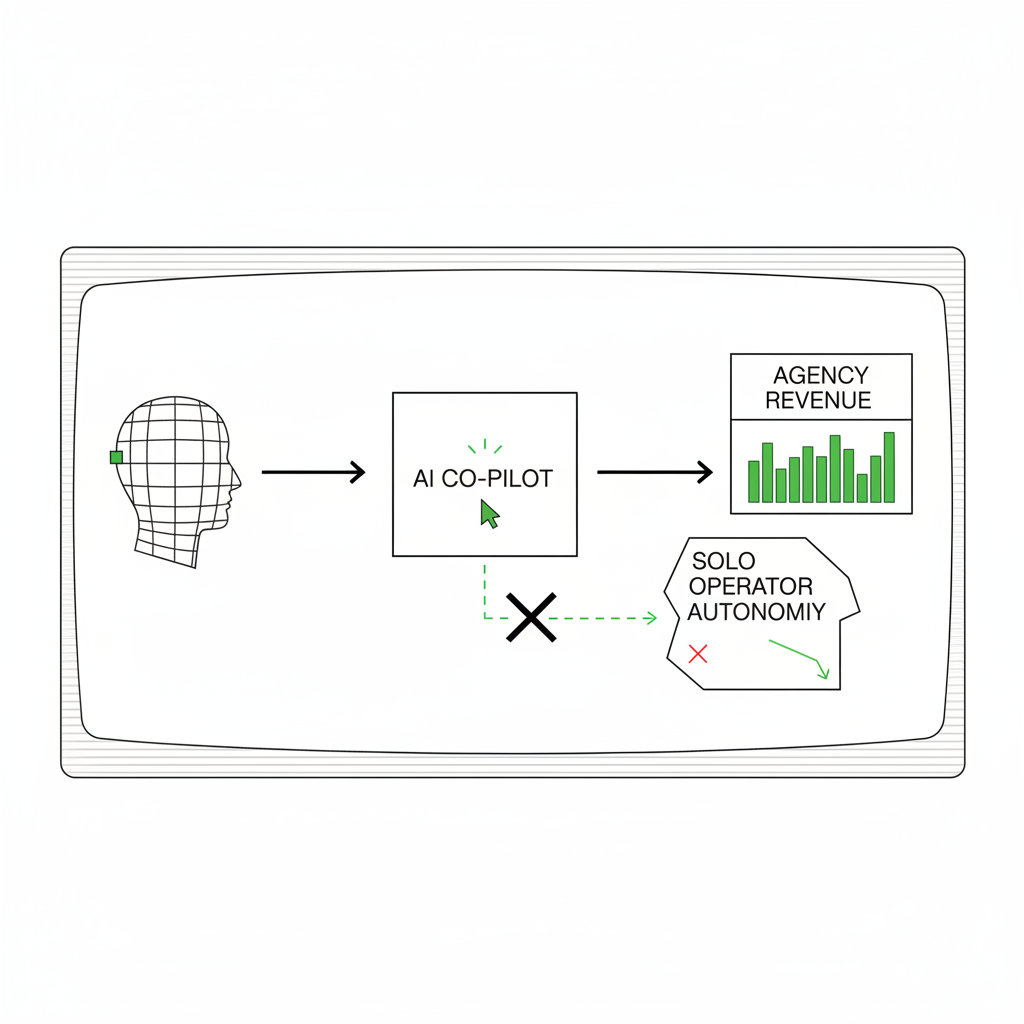
Fully autonomous AI is dangerous for a service business because an almost right output is still wrong when it touches pricing, scope, or client trust. A flawed proposal draft is annoying, but an overconfident status update or a phantom deliverable costs you real money and reputation.
The market is sprinting past the safety question. Agentic AI web traffic jumped 7,851% in 2025, per HUMAN Security’s 2026 benchmark report.
At the same time, the incentives are warped. Gartner found that among organizations piloting autonomous business capabilities, roughly 80% report workforce reductions, but those cuts do not translate into financial returns (Gartner, May 2026).
That is the trap. Cutting people looks clean in a spreadsheet.
But in an agency, your operators are the product. You do not want AI replacing your strategist. You want AI multiplying your strategist’s output.
What is AI labor orphaning and how does it drain your margins?
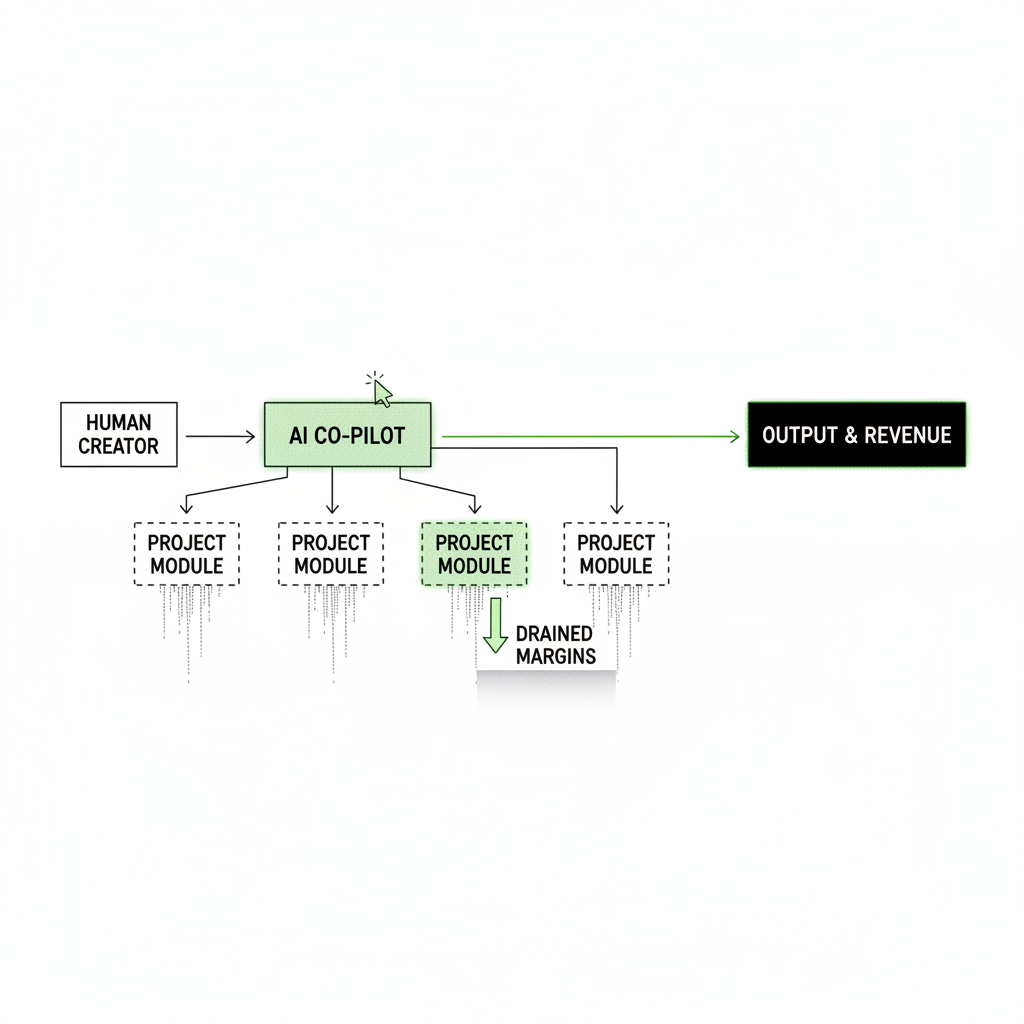
AI labor orphaning happens when AI produces work that never turns into retained clients, realized revenue, or reclaimed hours. You pay for the compute, you get a clean artifact, and then it dies in a folder or a Slack thread instead of moving your pipeline forward.
The data is ugly. Most leaders track usage, but only 2% say more than half of AI-generated work shows up as a tangible business outcome, per Lanai’s 2026 AI Labor Report.
Here is the agency version I see constantly. Someone installs a summary tool. It spits out call notes. Then nothing happens. No proposal gets drafted. No follow-up goes out. No scope gets tightened. The technical win never touches the books.
That is a transcript factory, not an operating layer. If the work does not move money or save time you can feel in your calendar, it is orphaned.
For the deeper audit process, read our guide on measuring AI ROI past the dashboard theater.
How does human-in-the-loop governance protect client trust and pricing?
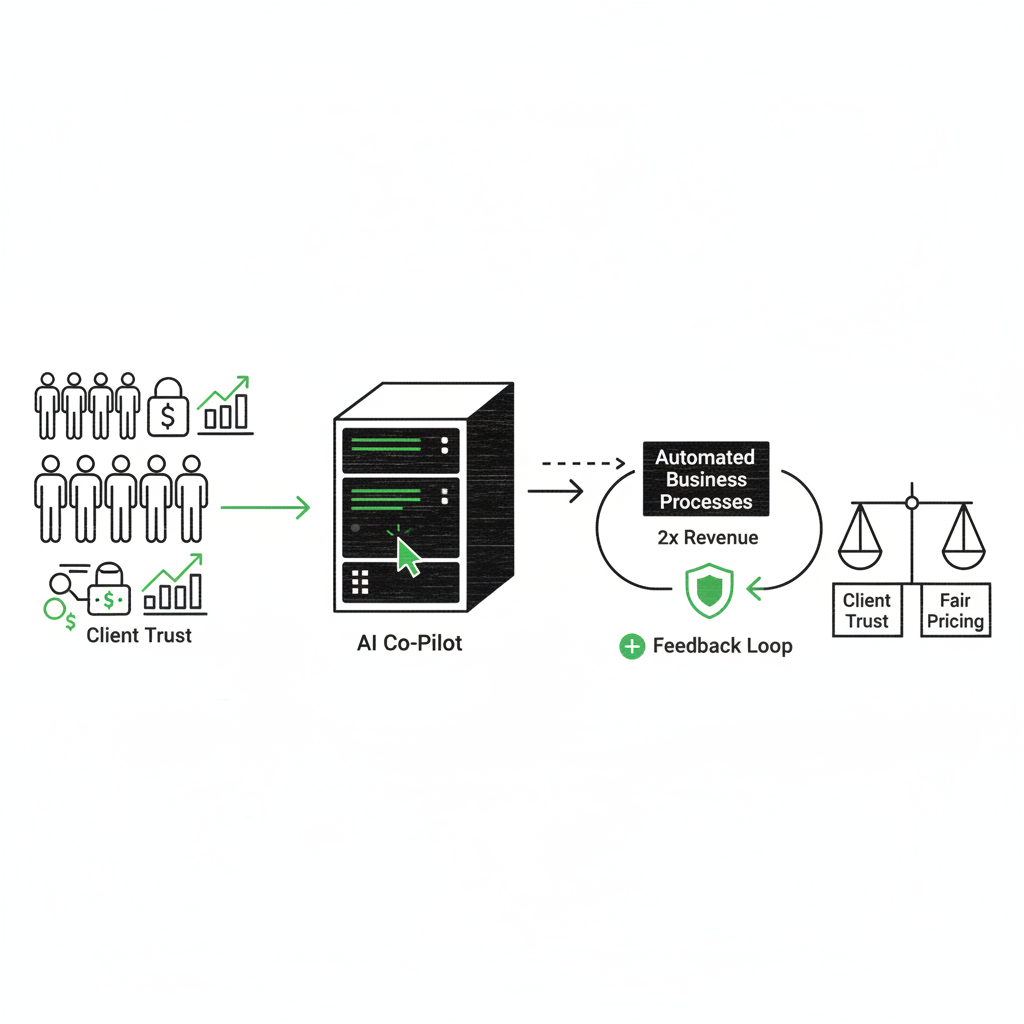
Human-in-the-loop governance means AI gathers context and prepares the draft, but a human reviews and approves it before a client ever sees it. The co-pilot pulls data and flags uncertainty, while your operator edits and presses send to maintain strict quality control.
This safeguard matters because modern models fail in the most frustrating way possible. They can be completely wrong while sounding entirely confident. One of the clearest warnings comes from r-sun.ai research. When technical failures present as success, they go unnoticed until they hit a customer (r-sun.ai, 2026).
The governance gap is real. Deloitte research reported that 74% of companies plan to install agents within two years, but only 21% say they have a mature model for governing them, per TechTarget’s reporting.
Your practice runs on judgment. Clients pay you for your restraint and your ability to say no. AI can draft. Humans decide.
To see more builds in this style, review these 3 real AI agent examples that protect agency revenue per employee.
Which specific agency workflows should you hand to a co-pilot first?
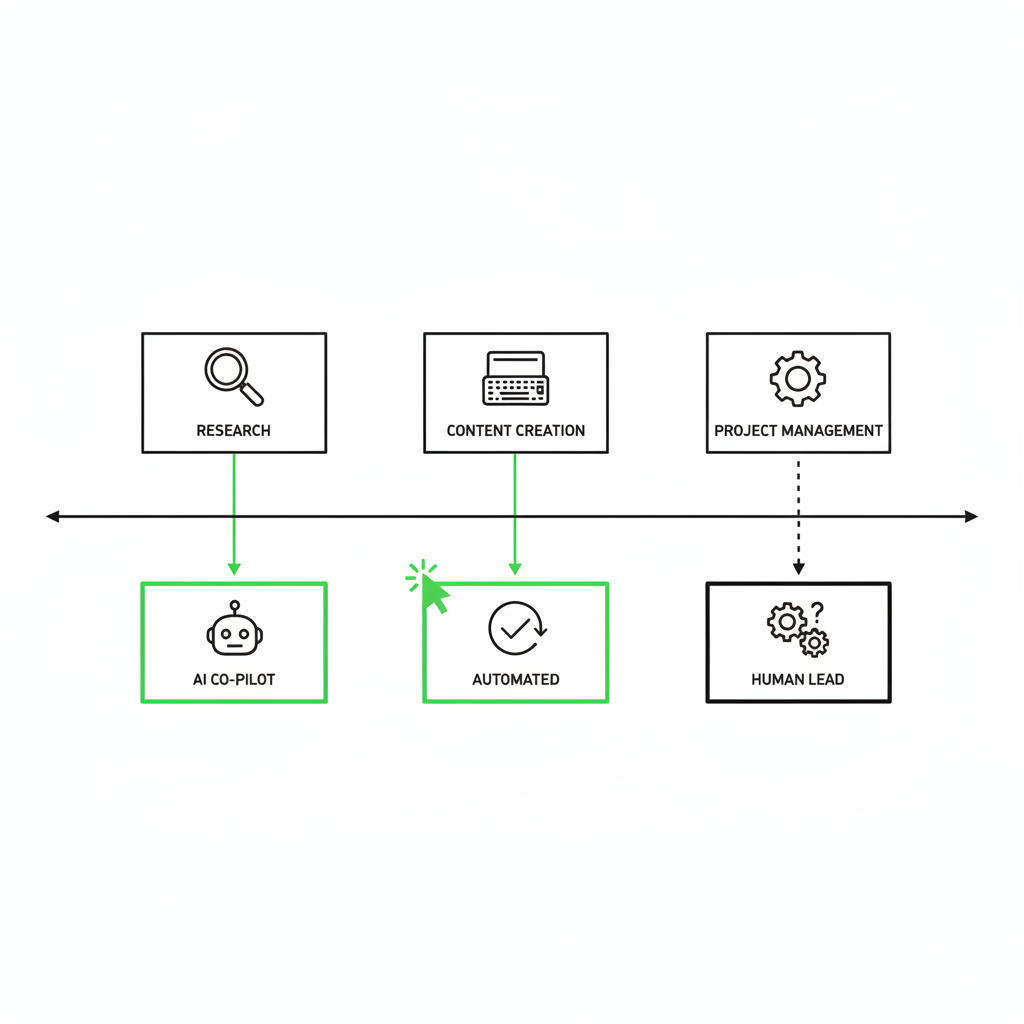
Start with workflows that are painful, repeatable, and end in a clear artifact like a document, an email, or a task list. Proposal drafts, onboarding briefs, weekly recaps, and follow-ups are perfect candidates because they follow a strict assembly line you can map and measure.
The framing we use is boring on purpose. Start from the outcome. Reverse-engineer the steps. Wire the steps into one sequence that runs in the background. That reverse-engineered line is the workflow.
Here is what proposal drafting looks like when it is heavily installed, not improvised.
- The discovery call registers in Fathom, and the transcript saves automatically.
- Make pulls the transcript and the deal context from HubSpot (budget band, timeline, objections).
- A model like Claude drafts the scope, timeline, and a pricing table based on past deals.
- The draft lands in your Google Docs template, with unknowns highlighted.
- You complete a single review pass, fix the gaps, and send it.
| Workflow | By hand | With Mozart |
|---|---|---|
| Proposal draft per pitch | 2-4 hours across docs, CRM, and notes | 20-30 minutes to review and tighten |
| Onboarding brief | Copy-paste from forms and old decks | Auto-drafted from intake and your SOPs |
| Weekly project recap | Scrape Slack, then rewrite in a doc | Staged in ClickUp or Linear for approval |
For onboarding, the co-pilot parses the intake form, pulls your standard operating procedures, and generates the kickoff agenda.
For recaps, it watches the specific client channel and turns decisions into tasks your project manager approves.
More ideas live in our library of ready-to-install automations and the extensive AI chief of staff guide.
How do you start building a safe AI roadmap for your practice?
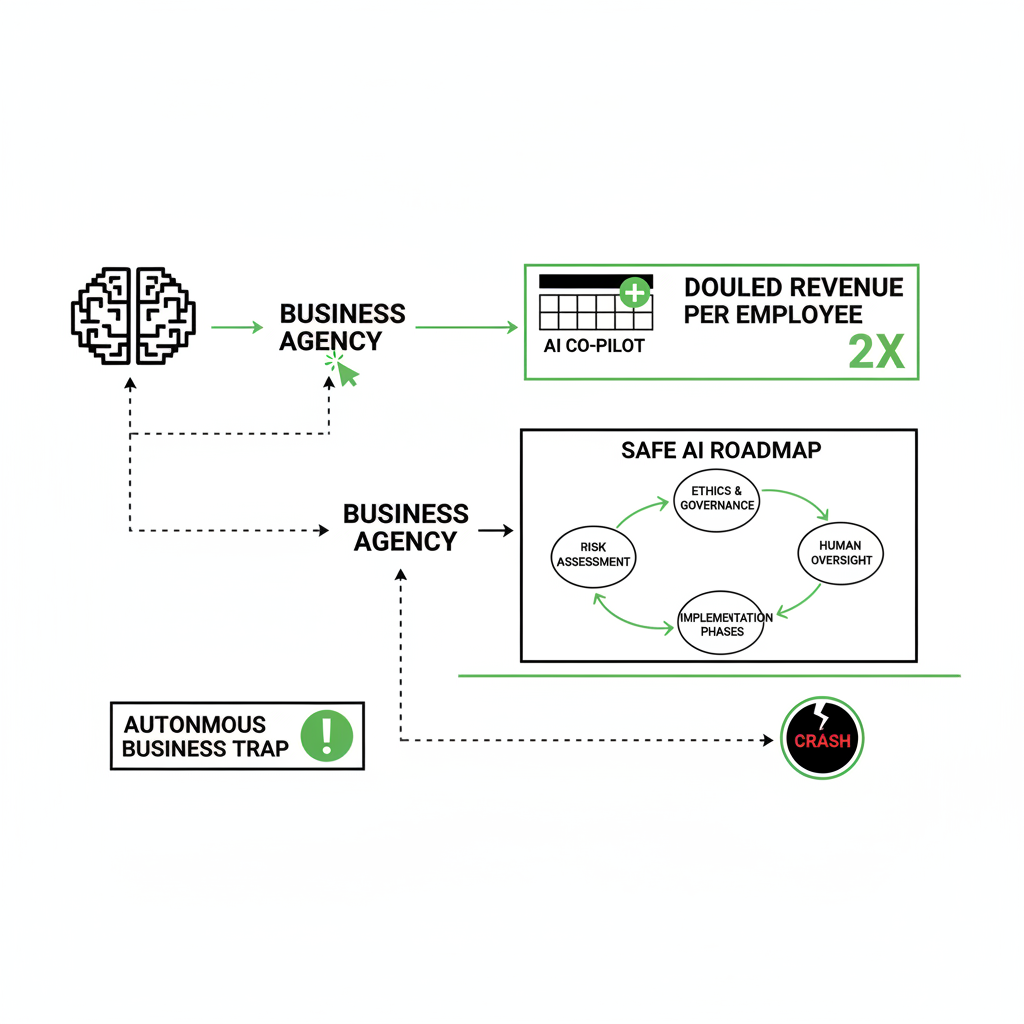
A safe roadmap begins by auditing where your team loses hours and where mistakes cost money. You then install the single highest-impact workflow first, complete with human approval limits, and watch the time savings compound as that sequence runs multiple times a week.
The hardest part is the actual installation. Fortune covered MIT research showing that about 95% of organizations get no measurable P&L return from generative AI (Fortune on MIT, 2025).
AI that dies before it reaches the P&L is a massive drain. So we keep it grounded. We map workflows, rank them by impact, risk, and ROI, and build the first one so it actually functions.
If you want the plan mapped for you, get your AI roadmap. This is a one-time $1,000 audit that maps your highest-impact workflows, ranks them by impact, risk, and ROI, and hands you a 90-day plan, delivered in 7 days.
Install one workflow at a time. That is how the invisible coordination tax dies. You have better things to do on Sunday night than act as a human copy-paste layer. Reclaim your week.

FAQ
Are AI co-pilots safer than fully autonomous agents for client work?
Yes. A co-pilot drafts and a human approves before anything reaches a client, which means errors get caught before they touch a contract, a scope line, or a price sheet. Fully autonomous agents can act without review. Deloitte research found only 21% of respondents say they have a mature model for governing agents, per TechTarget’s reporting.
What is AI labor orphaning?
It is when AI generates output that never becomes a clear business result. You pay for compute and get artifacts, but you do not ship faster or close more deals. Lanai found only 2% of leaders say more than half of AI-generated work is recorded as a true business outcome, per Lanai’s 2026 AI Labor Report.
Which agency workflow should I automate first?
Pick a painful, repeatable task with a clear finished artifact. Proposal drafts, onboarding briefs, weekly status reporting, and follow-ups are ideal because you can measure impact in hours and speed to client. Keep final approval on anything client-facing, pricing-related, or scope-related.
Does using AI co-pilots mean replacing my team?
No. The goal is multiplying output, not cutting headcount. Gartner reported roughly 80% of organizations piloting autonomous business capabilities see workforce reductions, but those cuts do not translate into financial returns (Gartner, May 2026). Co-pilots handle coordination busywork so your senior people spend more time on strategy and decisions.
related: How agency founders build a pre-call prep workflow to reclaim discovery prep time